Feeling stressed, tense, or mentally overloaded? You’re not alone. For many women, stress doesn’t just affect the mind — it shows up in the body too. Tight shoulders, shallow breathing, poor sleep, low energy, and that constant feeling of being “on” can make it hard to truly relax.
The good news is that yoga can help.
You do not need to be flexible. You do not need an expensive studio membership. And you definitely do not need to do advanced poses to feel calmer. A few gentle stretches and mindful breaths can go a long way in helping your body release tension and your mind slow down.
In this guide, you’ll learn 7 simple yoga poses for stress relief that are beginner-friendly, easy to do at home, and designed to help you relax both physically and mentally.
Want a ready-to-follow calming routine?
Download our Yoga for Stress Relief PDF Guide for a simple, beautifully organized practice you can use anytime at home.
Why Yoga Helps With Stress Relief
Stress has a way of getting stored in the body.
It can settle into your neck, shoulders, back, jaw, and hips. Over time, this can leave you feeling drained, tense, restless, and emotionally overwhelmed. Even when you want to relax, your body may still feel stuck in stress mode.
That’s why gentle yoga can be so powerful.
Yoga combines movement, breath, and mindful awareness. This helps signal to your nervous system that it is safe to soften. Slow stretching can release physical tension, and deep breathing can help bring a sense of calm and steadiness back into your day.
For beginners, this is especially helpful because stress relief yoga is not about pushing hard. It is about moving gently, breathing deeply, and creating a small moment of peace.
Signs Your Body May Need More Rest and Calm
You may benefit from a gentle yoga practice if you often experience:
- tight shoulders or neck tension
- lower back discomfort
- racing thoughts
- trouble relaxing at night
- shallow breathing
- emotional overwhelm
- low energy and irritability
A short yoga session will not erase stress completely, but it can help your body feel safer, softer, and more supported.
7 Simple Yoga Poses for Stress Relief
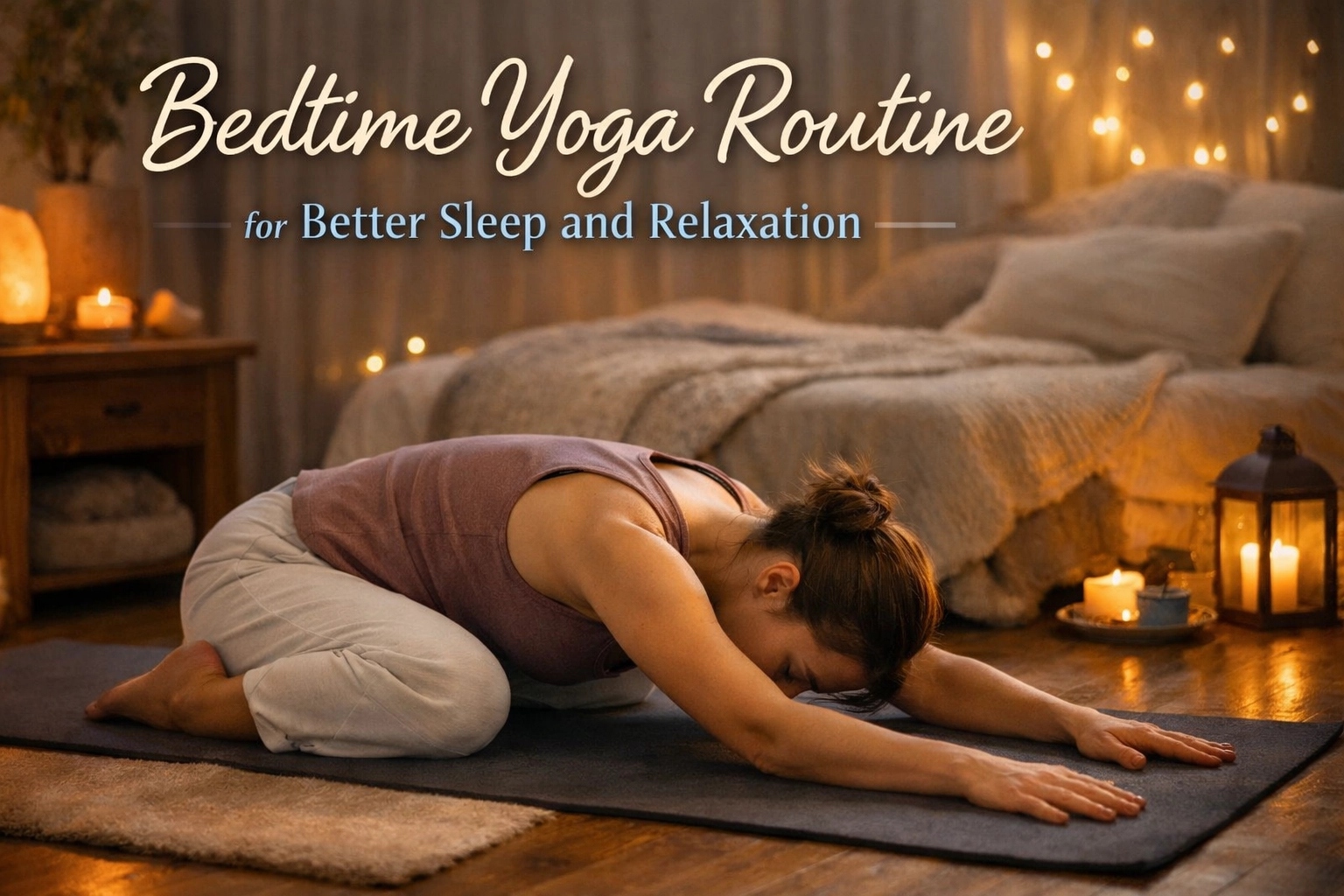
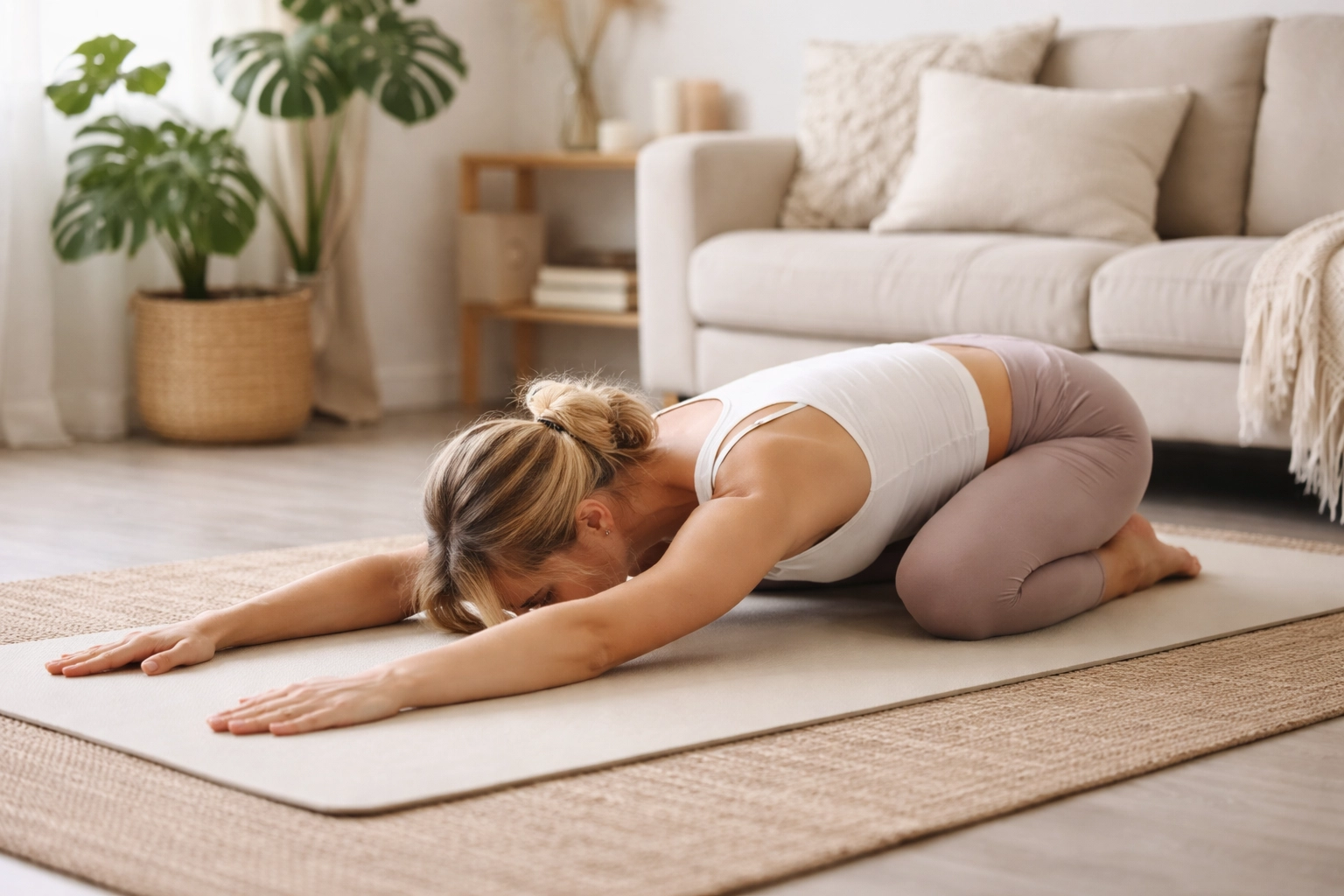
Child’s Pose
Child’s Pose is one of the most comforting yoga poses for relaxation. It gently stretches the lower back, hips, and thighs while helping the whole body soften.
Hold for: 1–3 minutes
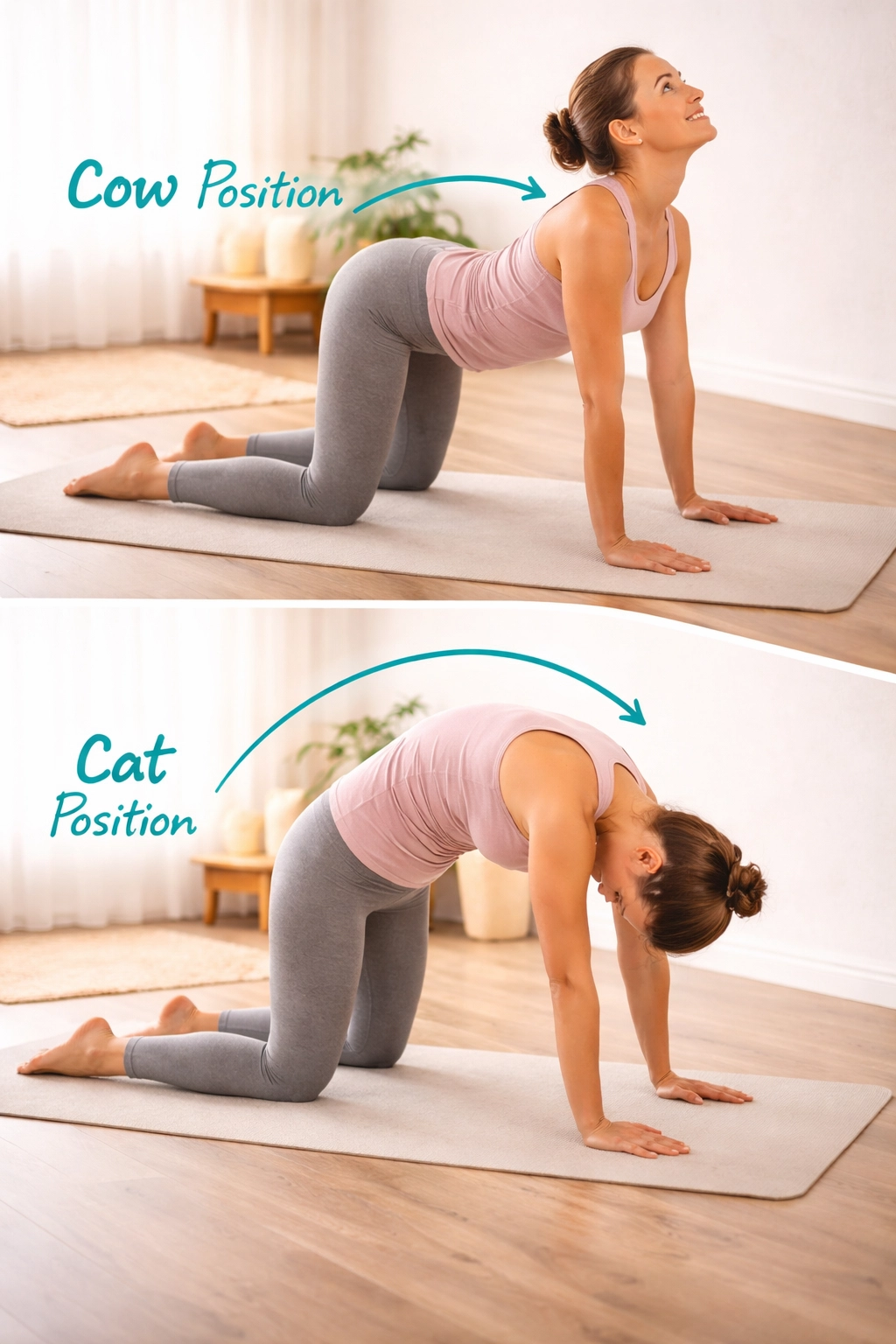
Cat-Cow Stretch
Cat-Cow is a gentle flowing movement that releases tension in the spine, shoulders, and neck.
Repeat for: 6–10 rounds
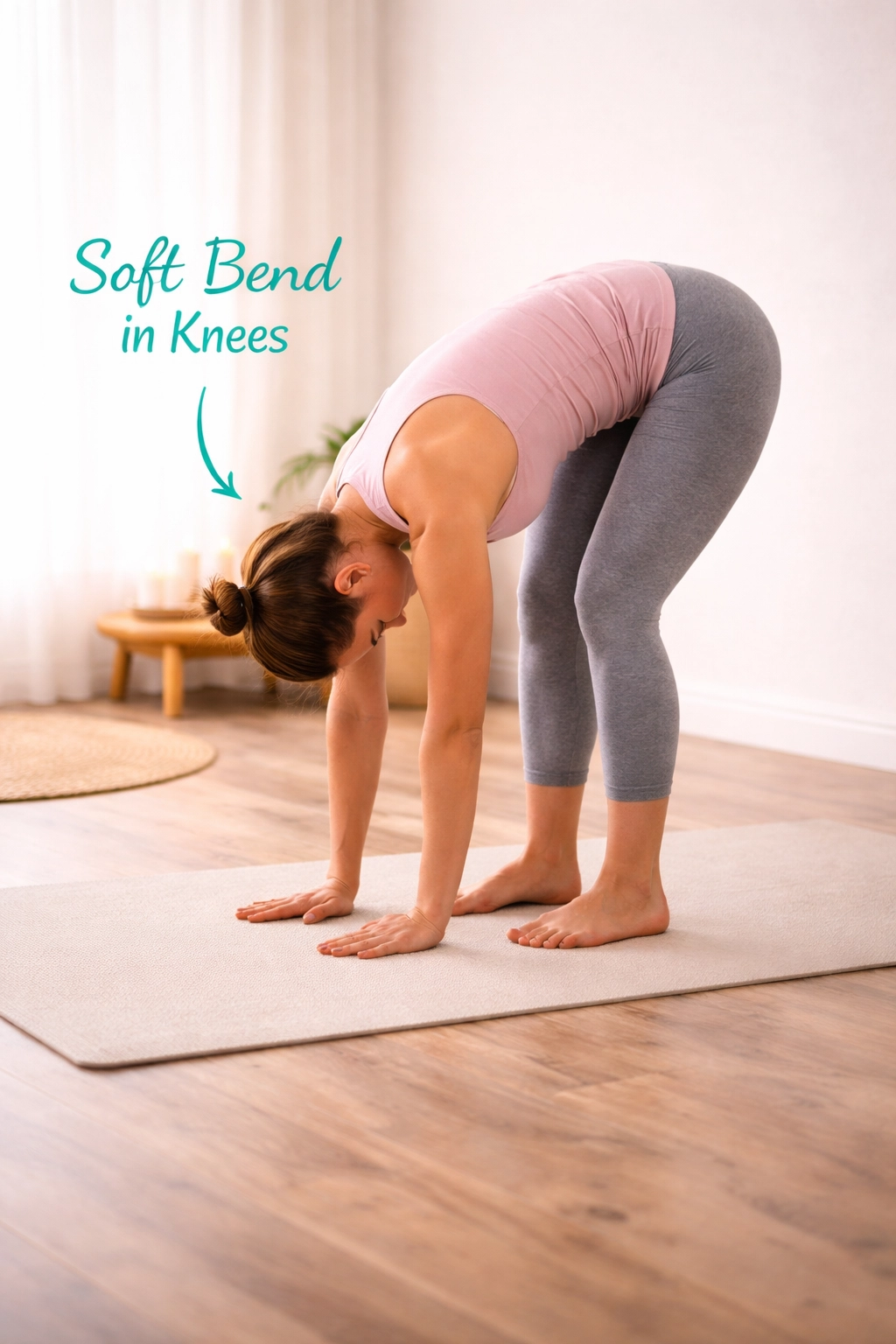
Standing Forward Fold
This gentle forward bend helps quiet the mind and release tension through the back body.
Hold for: 5–8 breaths
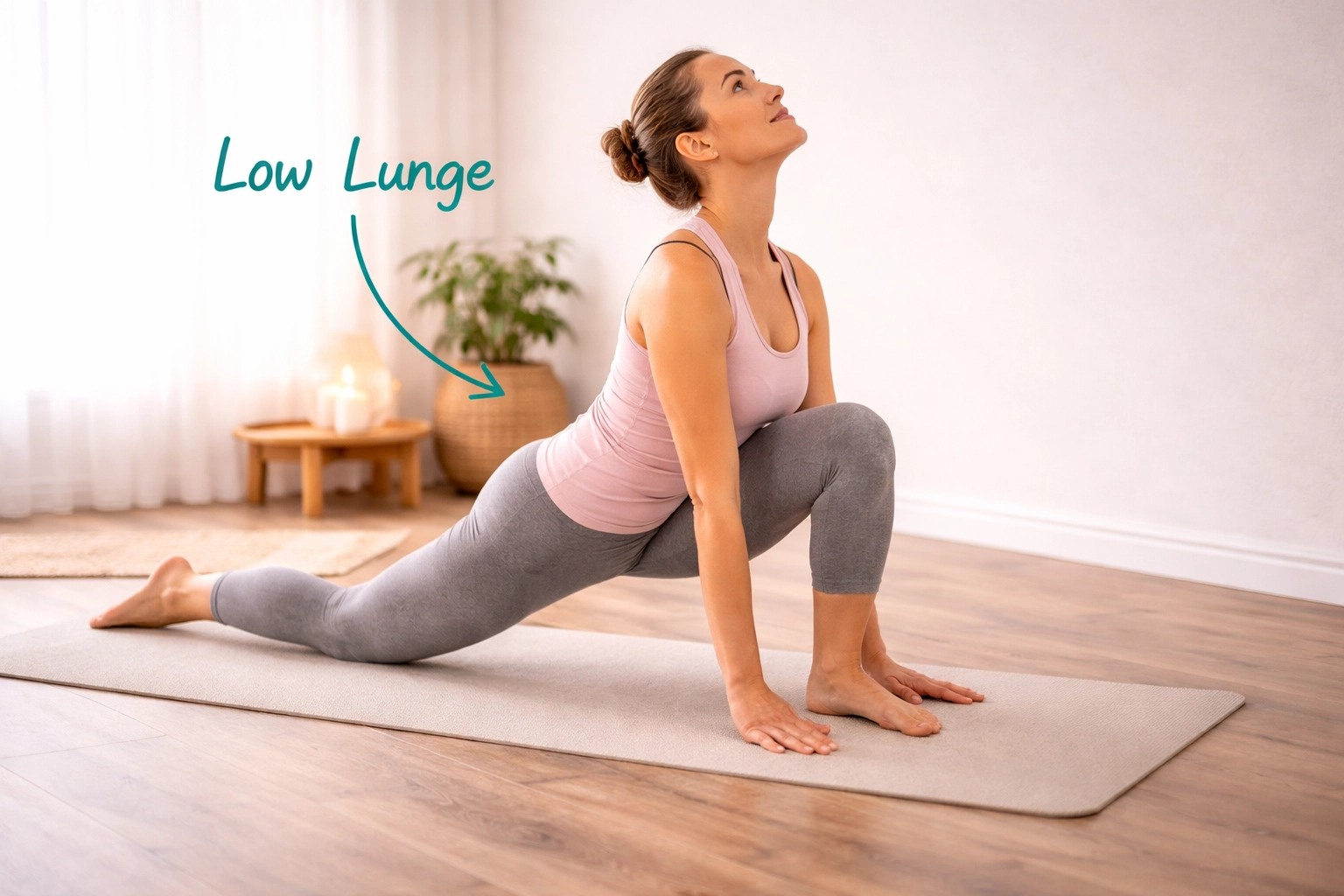
Low Lunge
Stress often builds in the hips, especially after long hours of sitting. Low Lunge helps create space in the front of the hips and chest.
Hold for: 5–8 breaths per side
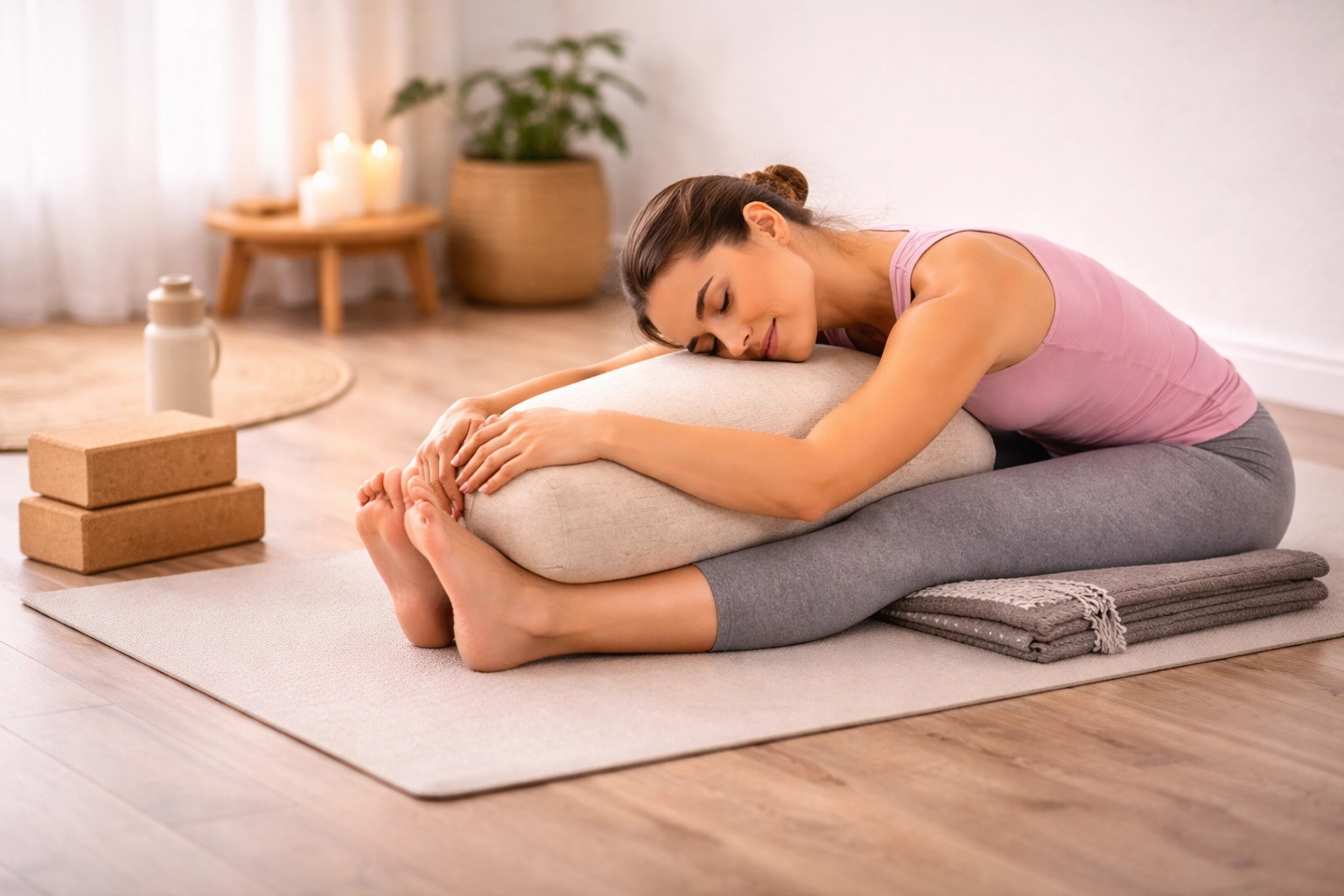
Seated Forward Fold
Seated Forward Fold is a quiet, grounding pose that helps relax the body and mind.
Hold for: 5–10 breaths
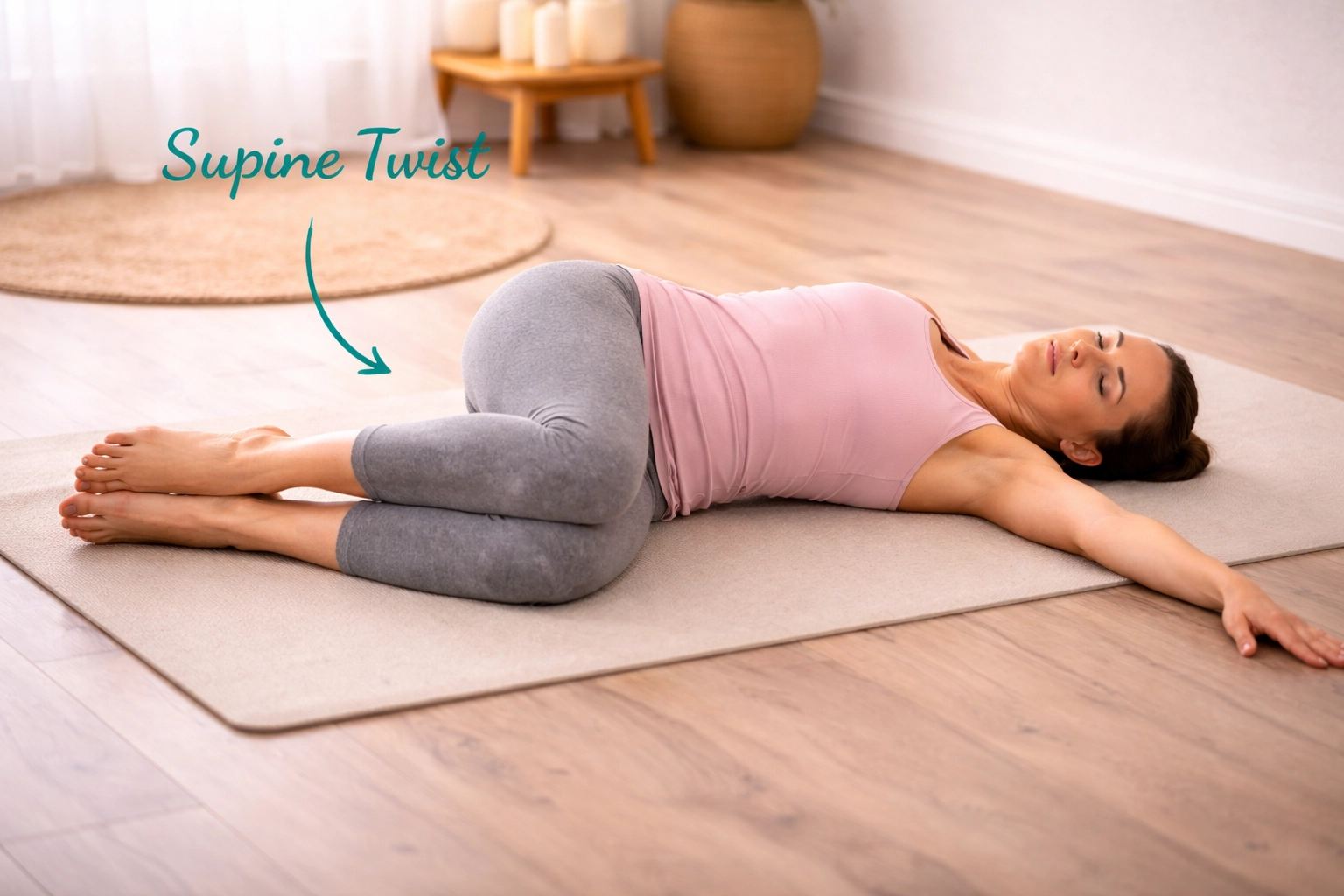
Supine Twist
A gentle reclining twist can help release tension in the lower back and spine while encouraging deeper breathing.
Hold for: 5–8 breaths per side
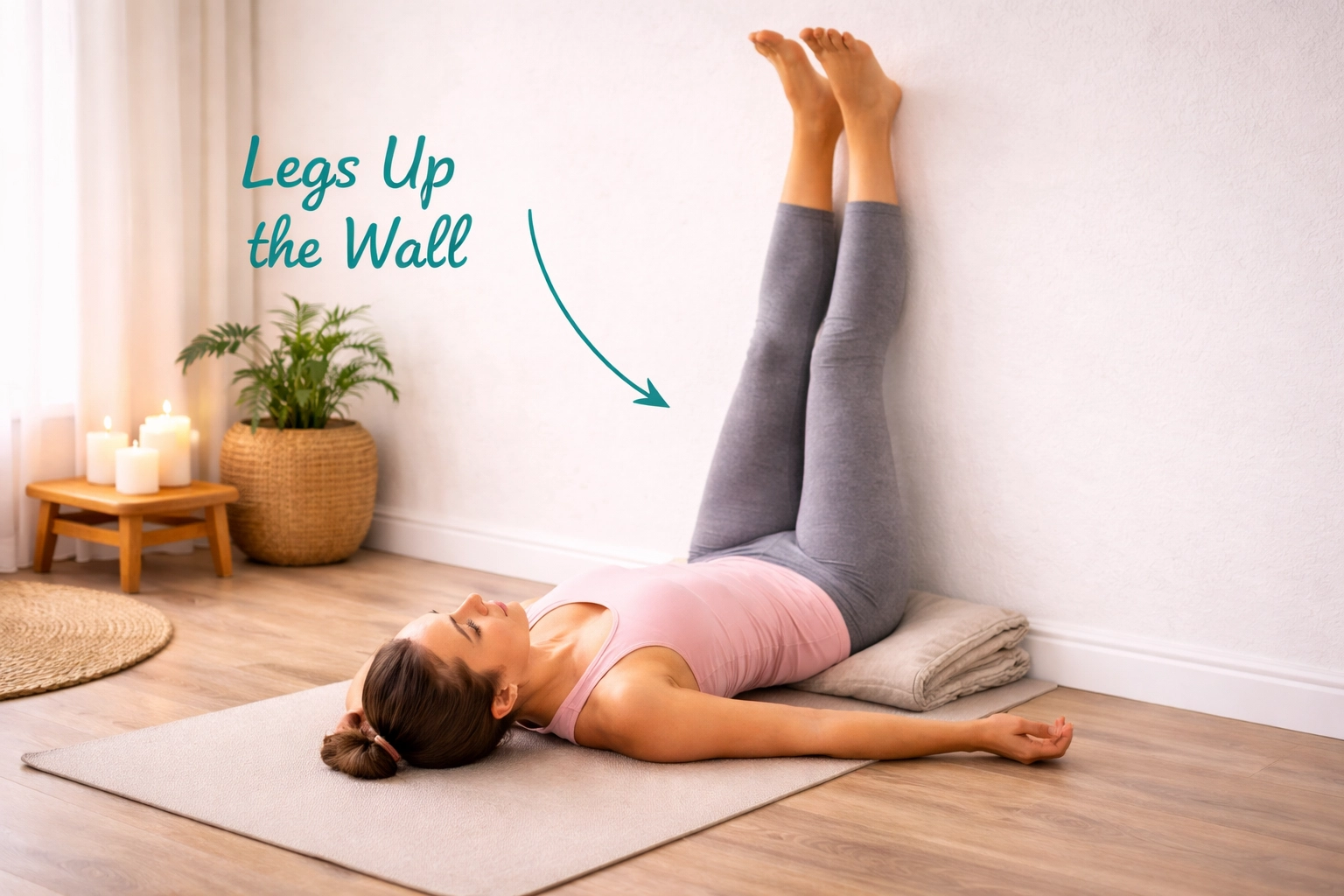
Legs Up the Wall
This is one of the most relaxing yoga poses for stress relief and fatigue.
Hold for: 3–10 minutes
<!– CTA BLOCK 1 –>
A Simple 10-Minute Yoga Routine for Stress Relief
Here is a quick sequence you can try anytime you need to reset:
- Child’s Pose – 1 minute
- Cat-Cow Stretch – 1 minute
- Standing Forward Fold – 1 minute
- Low Lunge – 1 minute each side
- Seated Forward Fold – 1 minute
- Supine Twist – 1 minute each side
- Legs Up the Wall – 2 minutes
This short routine is perfect for mornings when you wake up feeling anxious, afternoons when you feel mentally overloaded, or evenings when you need help winding down.
How to Make Stress Relief Yoga a Consistent Habit
The most effective yoga practice is not the longest or the hardest. It is the one you actually return to.
That is why short, simple sessions work so well. When your practice feels accessible, it becomes easier to make it part of your daily routine.
A few simple tips:
- keep your mat somewhere visible
- practice at the same time each day
- use pillows and blankets for comfort
- focus on your breathing, not perfection
- start with just 5–10 minutes
Small routines can create a real sense of calm over time.
Why a PDF Guide Makes It Easier
It is one thing to read about yoga poses. It is another thing to have a clear, calming plan ready to follow.
A guided PDF helps remove the guesswork. Instead of wondering what pose to do next, how long to hold it, or how to build a routine, you have everything laid out for you in one place.
Our Yoga for Stress Relief PDF Guide is designed to help you:
- build a calming at-home routine
- stay consistent with a simple structure
- feel more confident as a beginner
- reduce stress without overthinking your practice
- create a wellness ritual that fits into real life
If you want something you can save, print, or keep on your phone, this guide makes stress relief yoga feel much easier to stick with.
<!– CTA BLOCK 2 –>
Final Thoughts
You do not need a perfect routine to start feeling better.
Sometimes all it takes is one quiet moment, one deep breath, and one gentle stretch to begin shifting out of stress mode. These 7 simple yoga poses can help you release tension, reconnect with your body, and create more calm in your day.
Start small. Keep it simple. Let your yoga practice become a soft place to land.
And when you are ready for more guidance, the Yoga for Stress Relief PDF Guide can help you build a soothing routine you can come back to anytime.
Frequently Asked Questions
Is yoga good for stress relief?
Yes, gentle yoga can be very helpful for stress relief. It combines movement, breathing, and mindfulness, which may help calm the nervous system and reduce physical tension in the body.
What type of yoga is best for stress relief?
Slow and gentle styles are usually best for stress relief, especially for beginners. Restorative yoga, gentle stretching, and simple breath-focused poses can be especially calming.
Can beginners do yoga for stress relief?
Absolutely. Beginner-friendly yoga for stress relief is all about simple poses, comfortable modifications, and slow breathing. You do not need experience or flexibility to start.
How long should I do yoga for stress relief?
Even 10 minutes can make a difference. A short daily practice is often more effective than waiting for the perfect time to do a long session.
What is the most relaxing yoga pose?
Many people find Child’s Pose and Legs Up the Wall especially relaxing because they encourage stillness, softness, and deeper breathing.
Can yoga help with anxiety and tension?
Yoga may help reduce feelings of tension and support emotional calm by encouraging relaxation in both the body and mind. Many people use it as part of a gentle self-care routine.