Looking for a gentle way to feel stronger, less stressed, and more flexible without going to a studio or buying yoga gear? This beginner yoga routine at home is a simple place to start.
If you have ever thought, “I want to try yoga, but I’m not flexible enough,” you are not alone. Many women want a healthy routine that feels calming, supportive, and realistic for everyday life. But between work, family, stress, and screen time, it can feel hard to know where to begin.
The good news is that yoga for beginners does not have to be complicated. You do not need expensive equipment, a perfect body, or advanced skills. You just need a little space, a few minutes, and a willingness to move gently.
In this guide, you will learn how yoga can support your body and mind, which simple yoga poses are best for beginners, how to avoid common mistakes, and how to build a daily yoga routine you can actually stick with. Whether your goal is yoga for flexibility, yoga for stress relief, or simply creating a healthier wellness habit, this beginner-friendly practice can help you feel better from day one.
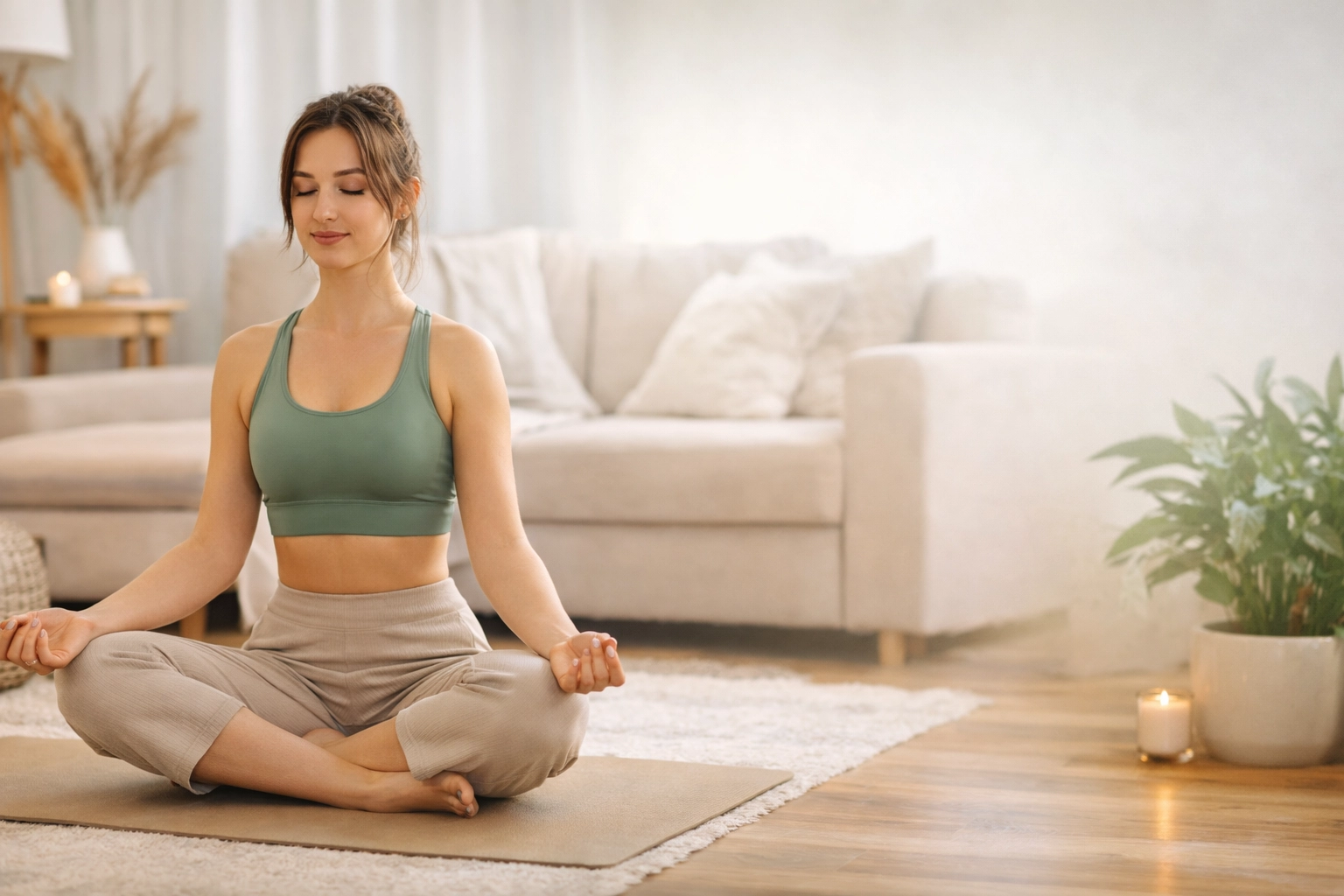
Benefits of Yoga for Body and Mind
Yoga is much more than stretching. It combines movement, breathing, balance, and focus, which is why it supports both physical and mental wellness.
1. Improves flexibility and mobility
One of the biggest reasons people search for yoga for flexibility is because it helps release tight muscles and gently improve range of motion. This can be especially helpful if you spend long hours sitting at a desk or feel stiff in your hips, back, shoulders, or hamstrings.
Over time, regular practice can help your body feel more open, comfortable, and mobile.
2. Supports stress relief and relaxation
Yoga encourages slower breathing and mindful movement, which can help calm the nervous system. That is why many people turn to yoga for stress relief after busy days or during overwhelming seasons of life.
Even 10 minutes of yoga at home can help reduce tension, quiet mental clutter, and create a sense of calm.
3. Builds strength in a gentle way
Many simple yoga poses look easy, but they also build real strength. Holding positions like Downward Dog, Low Lunge, or Plank variations can strengthen your core, legs, glutes, arms, and back.
This makes yoga a great option for women who want a low-impact way to feel stronger without intense workouts.
4. Improves posture and body awareness
Yoga teaches you how to stand, sit, and move with more awareness. This can help improve posture, especially if you often feel rounded through the shoulders or tight in the lower back.
5. Boosts overall wellness
Yoga supports a healthy lifestyle because it blends movement with mindfulness. It can become a grounding daily ritual that helps you feel more energized in the morning or more relaxed in the evening.
A short science-backed wellness explanation
Research has shown that yoga may help lower stress, improve flexibility, support balance, and enhance overall well-being by combining movement, breath control, and relaxation. Deep breathing and mindful movement can help shift the body out of “fight or flight” mode and into a calmer state, which may benefit mood, sleep, and stress levels.
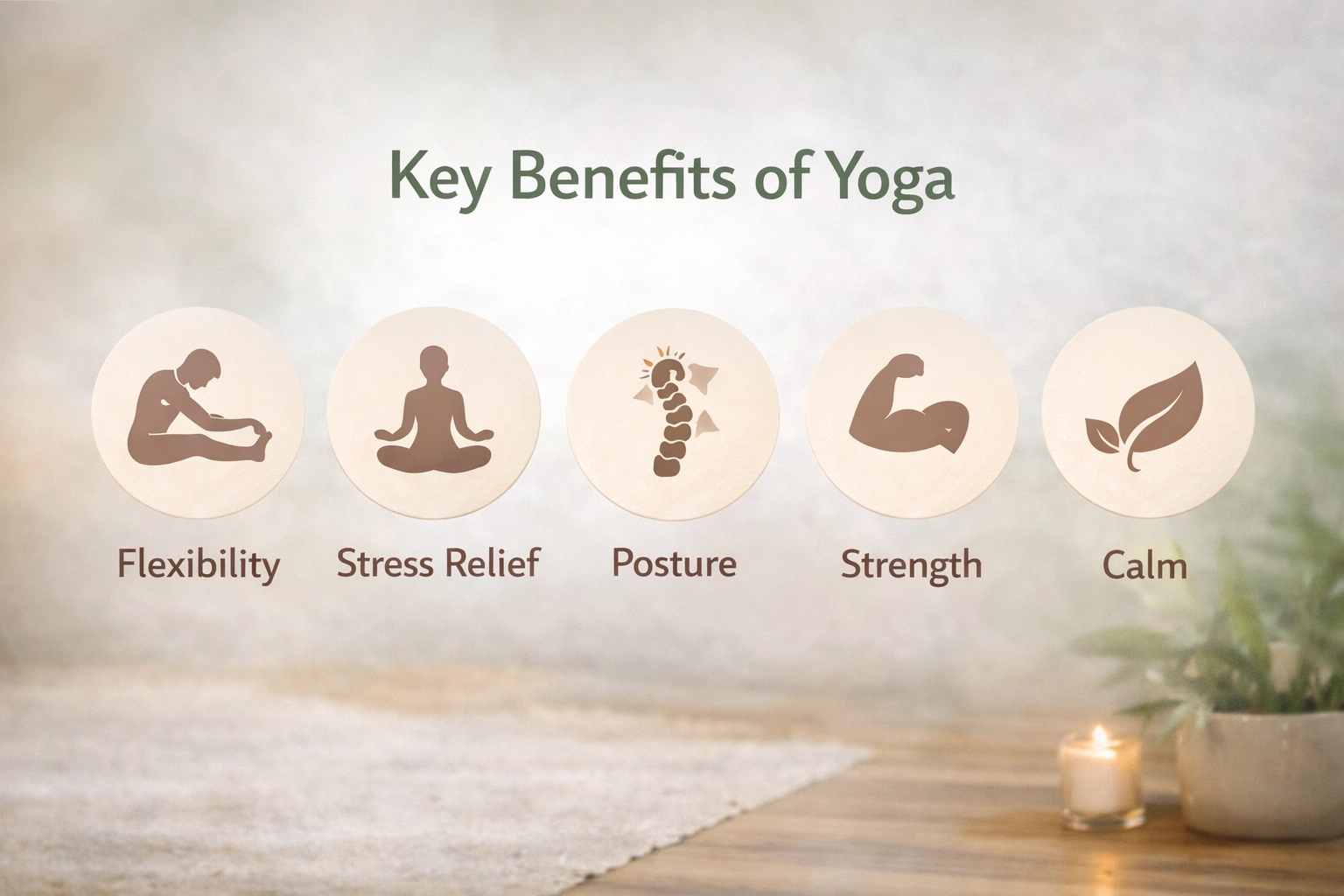
Why Yoga at Home Works So Well for Beginners
Starting at home can actually make yoga easier.
You can move at your own pace, wear what feels comfortable, pause when needed, and focus on learning without comparing yourself to others. A home routine also makes it easier to turn yoga into a consistent habit.
Benefits of practicing yoga at home:
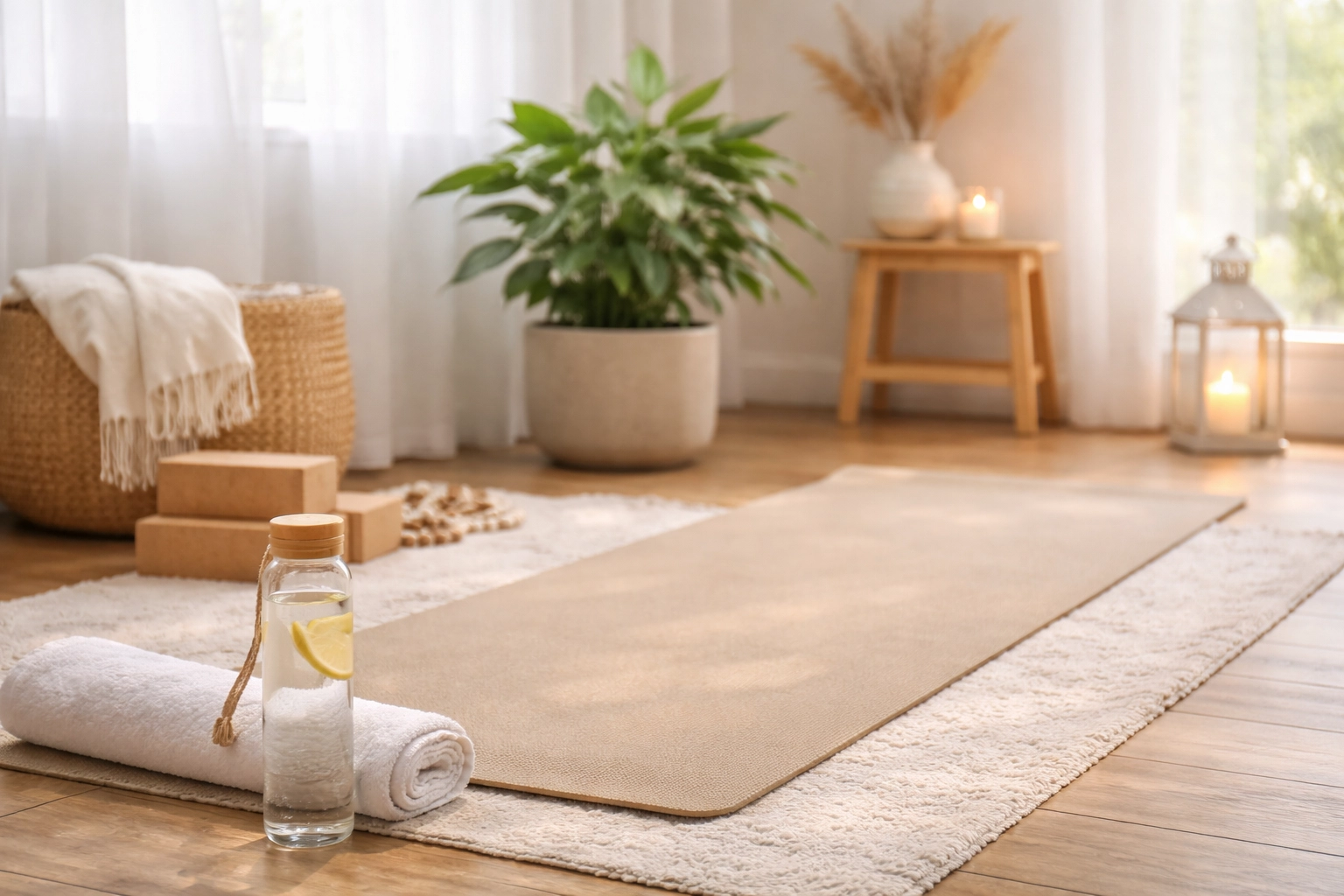
And the best part: you do not need equipment. A soft rug, carpet, or towel can work when you are just getting started.
Main Section: Simple Yoga Poses for Beginners at Home
Below are beginner-friendly poses that are easy to learn and gentle on the body. These are some of the best simple yoga poses to include in a home practice.
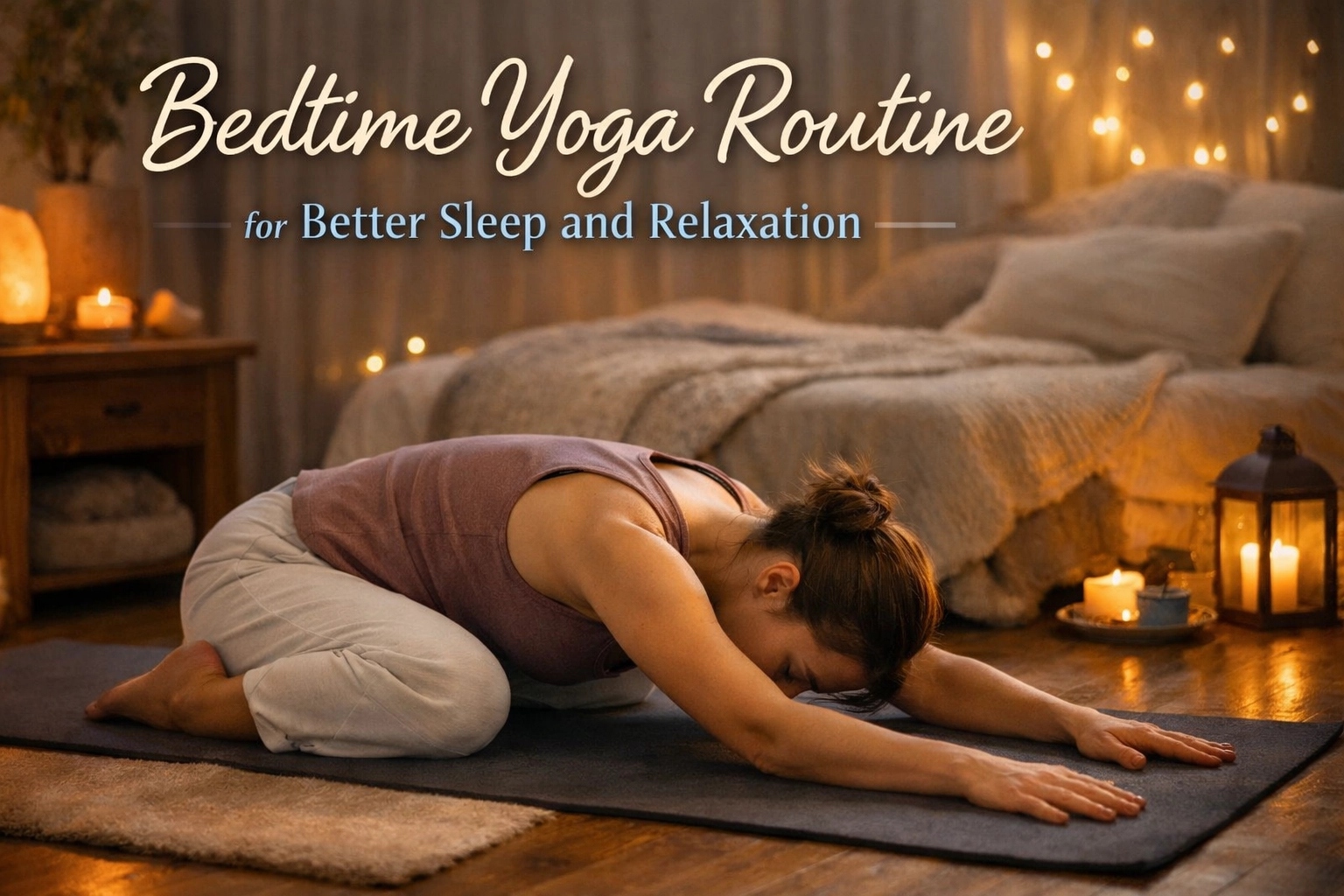
Child’s Pose
Child’s Pose is a resting pose that helps release tension in the lower back, hips, and shoulders.
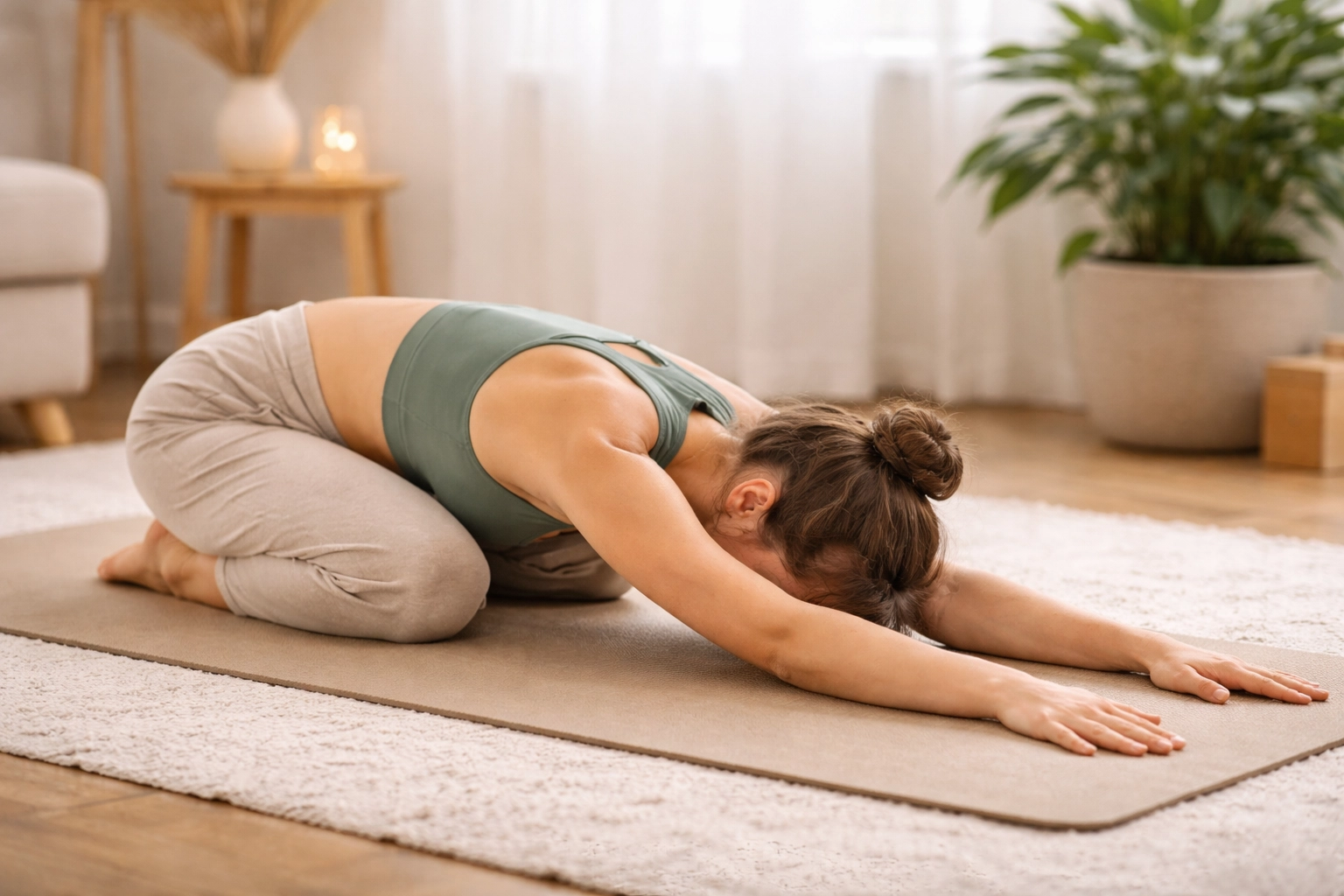
How to do it:
- Kneel on the floor or a soft surface.
- Bring your big toes together and knees apart.
- Sit your hips back toward your heels.
- Stretch your arms forward and rest your forehead down.
- Breathe slowly for 5 to 8 breaths.
Why beginners love it: It feels calming, grounding, and safe.
Cat-Cow Stretch
Cat-Cow is excellent for warming up the spine and relieving stiffness.
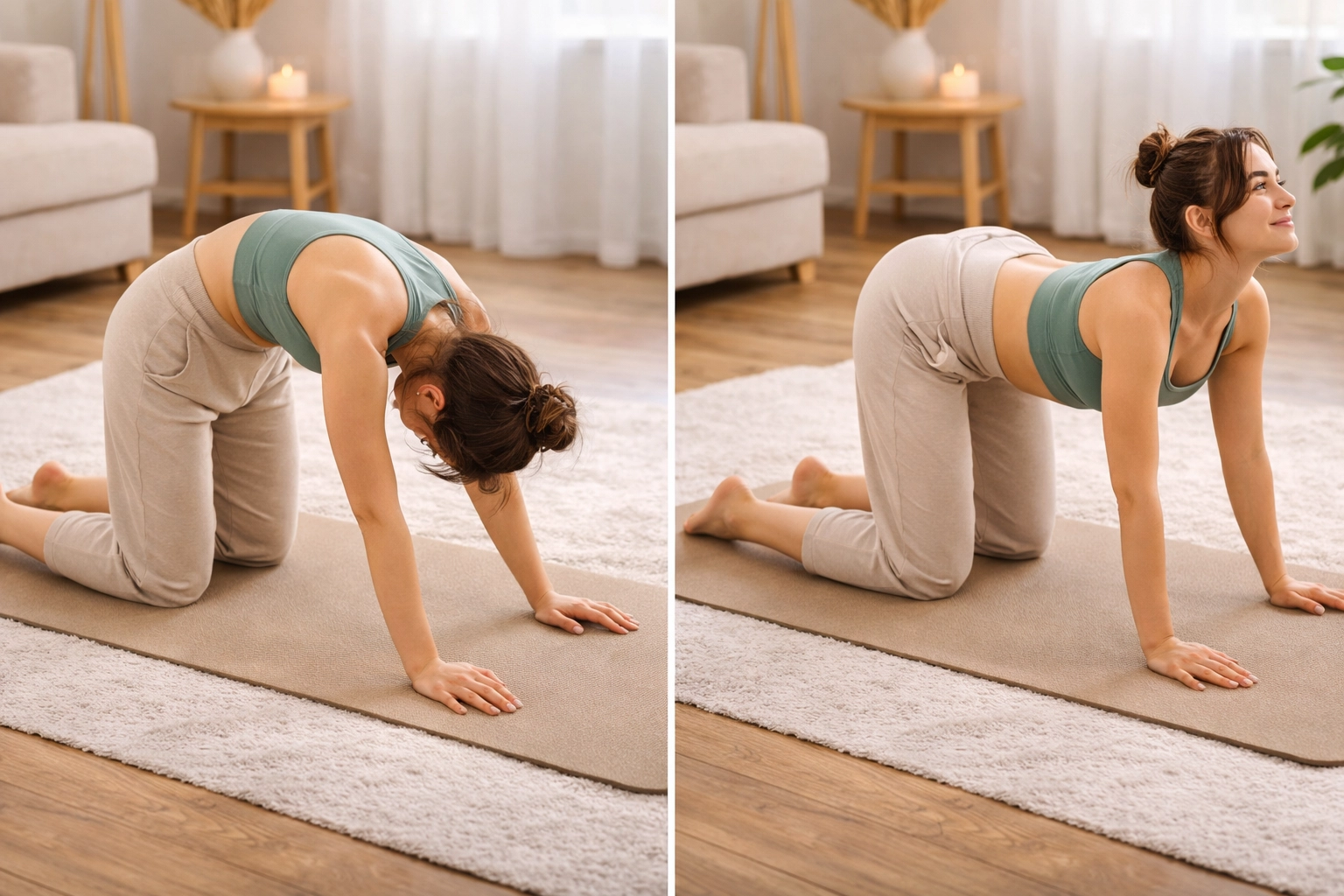
How to do it:
- Start on hands and knees.
- Inhale, lift your chest and tailbone for Cow Pose.
- Exhale, round your spine and tuck your chin for Cat Pose.
- Repeat slowly for 5 to 8 rounds.
Benefit: Great for back mobility and gentle stress relief.
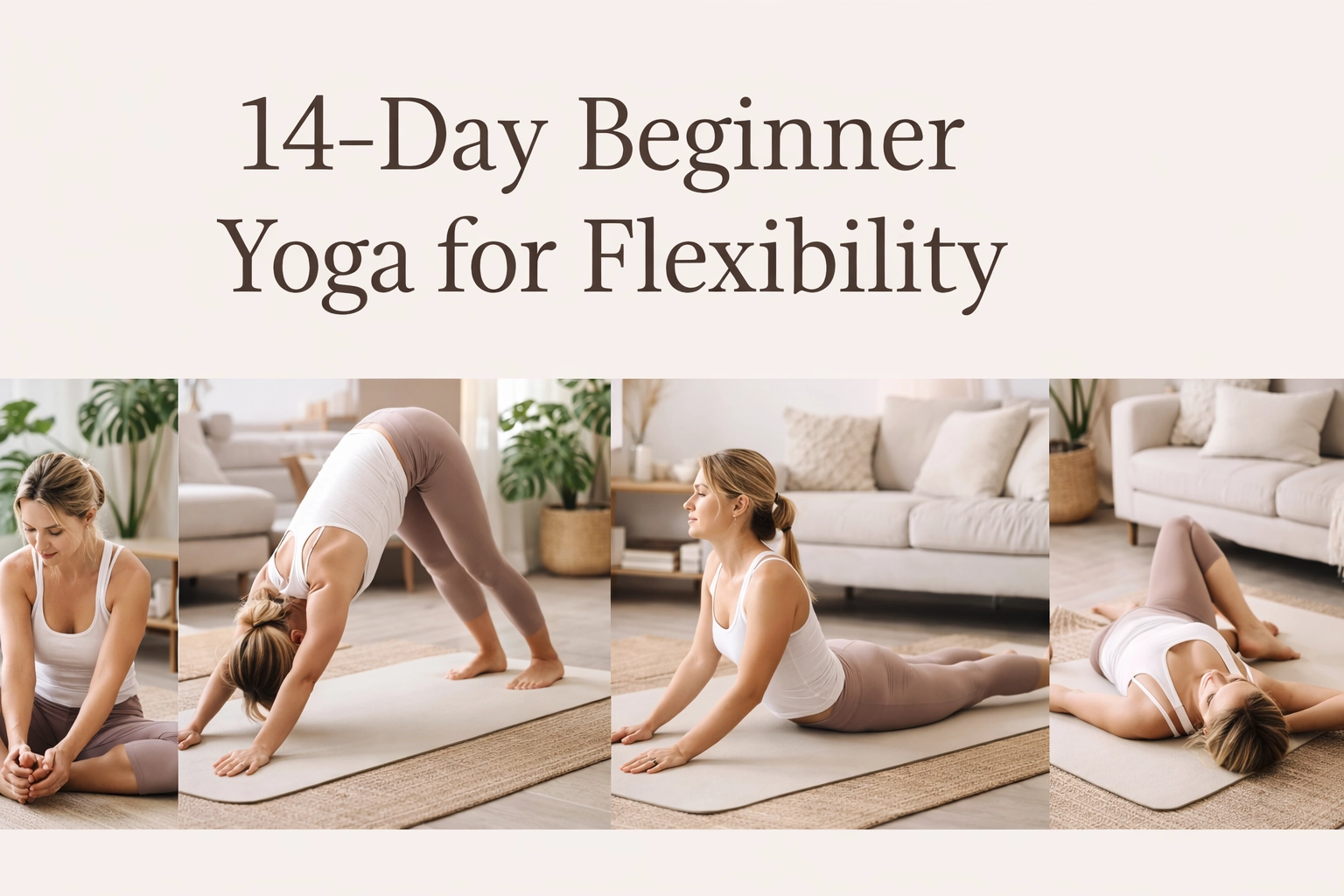
Downward Dog
This pose stretches the back body and builds light upper-body strength.
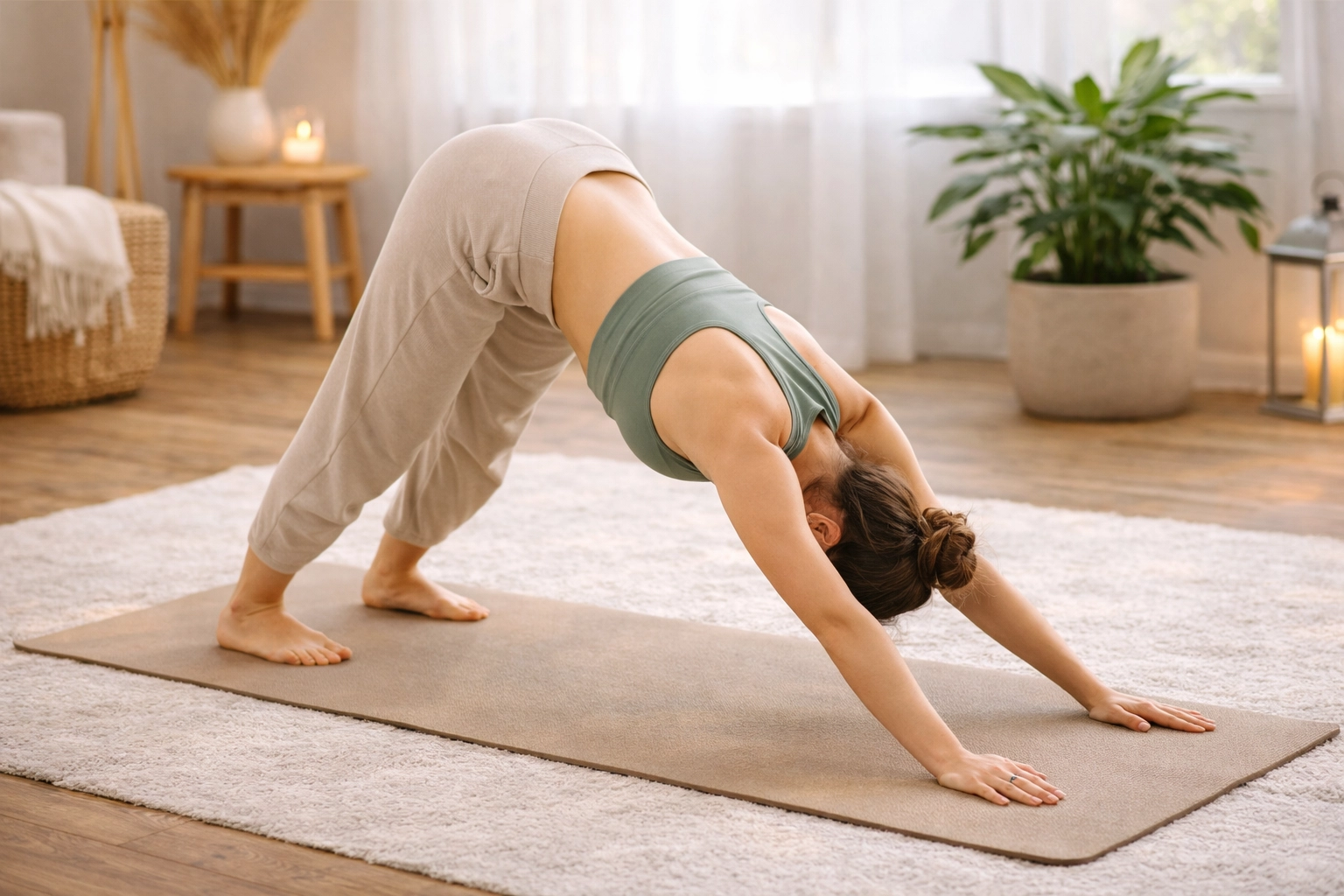
How to do it:
- Start on hands and knees.
- Tuck your toes and lift your hips up and back.
- Keep your knees slightly bent if needed.
- Press your hands into the floor and relax your neck.
- Hold for 3 to 5 breaths.
Beginner tip: Bent knees are completely fine. Focus on lengthening your spine, not forcing your heels down.
Low Lunge
Low Lunge helps open the hips and stretch the front of the body.
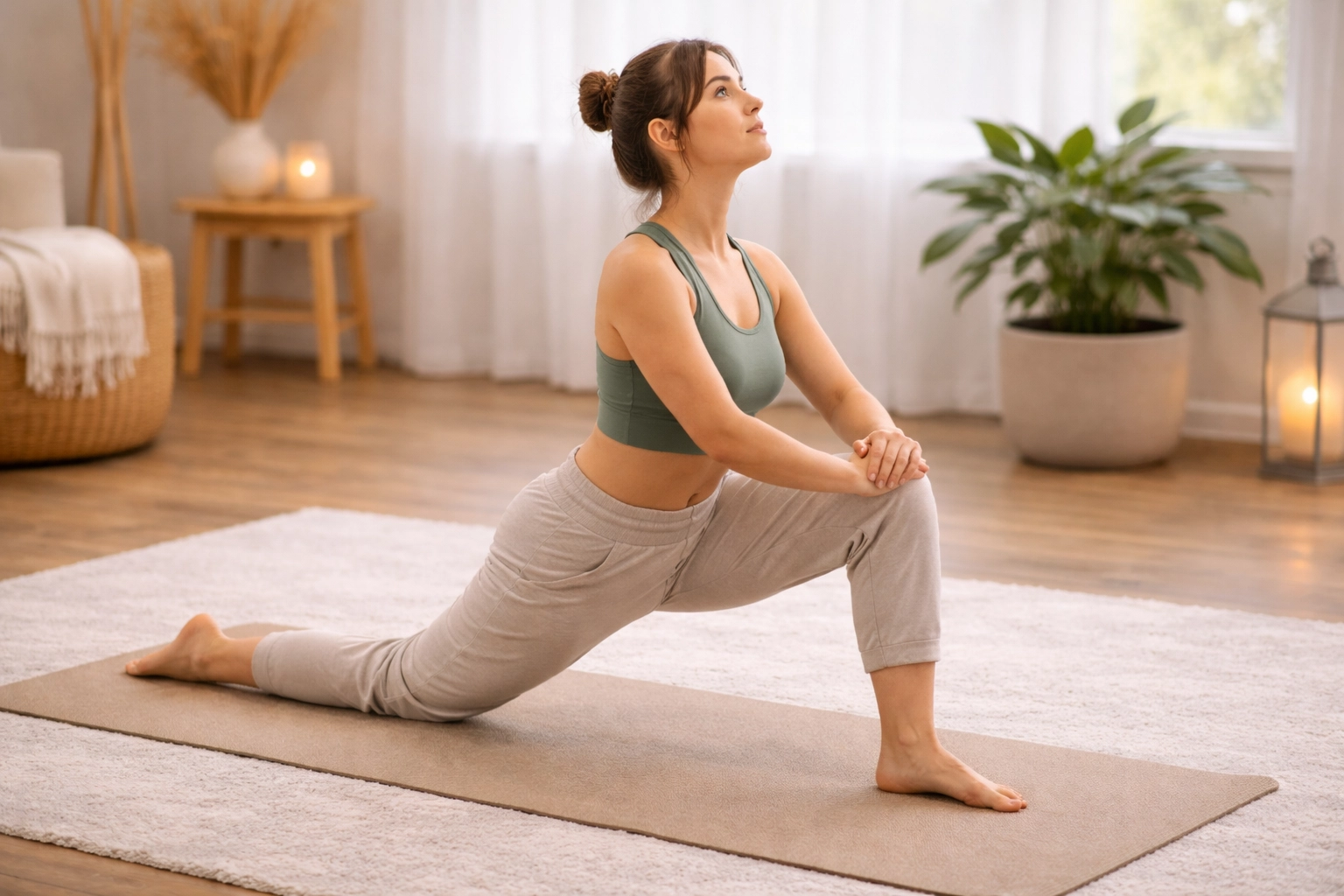
How to do it:
- Step one foot forward from hands and knees.
- Keep the back knee down.
- Lift your chest and place hands on your front thigh.
- Hold for 5 breaths, then switch sides.
Benefit: Wonderful for people who sit a lot and feel tight in the hips.
Seated Forward Fold
A gentle stretch for the hamstrings and lower back.
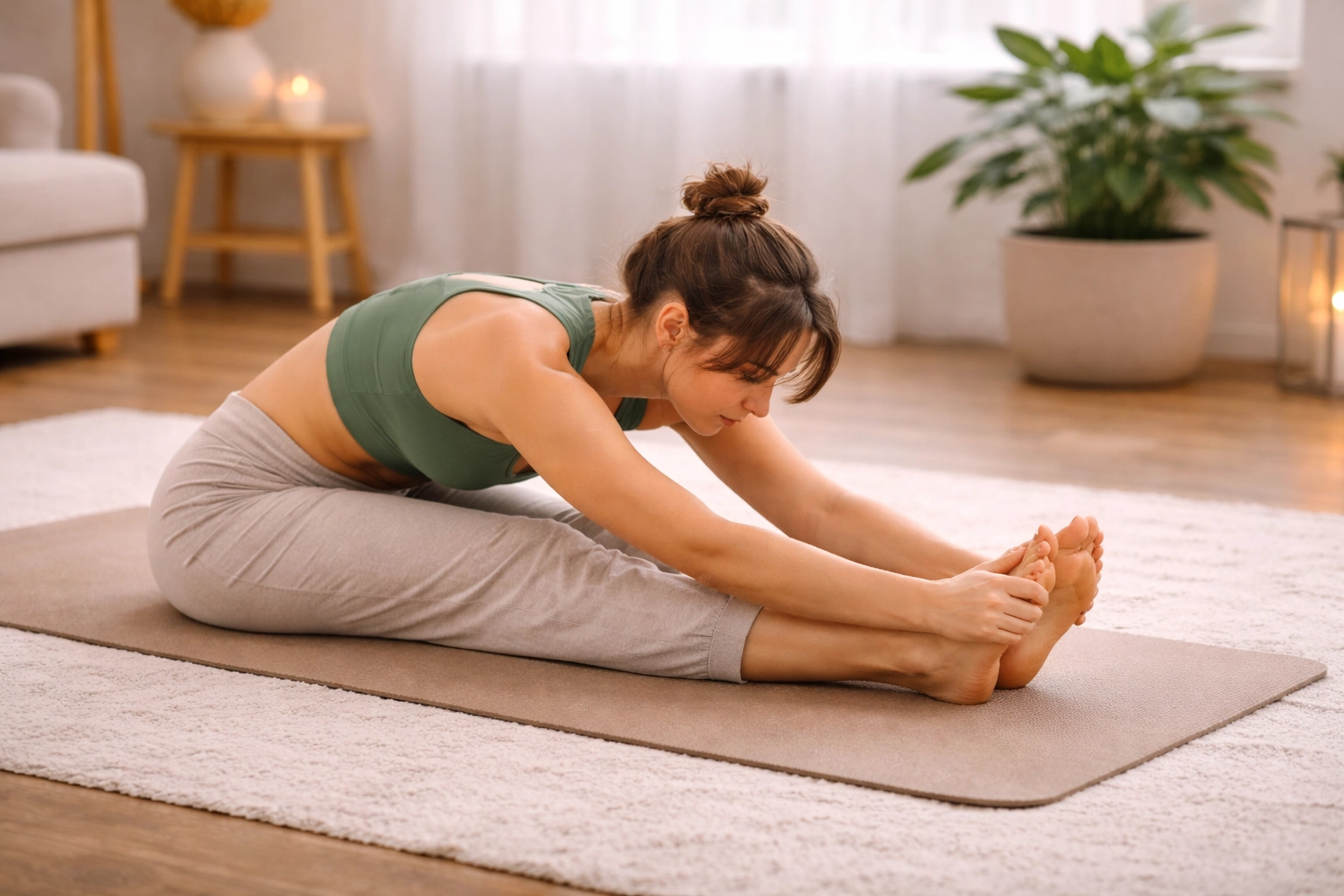
How to do it:
- Sit with legs extended forward.
- Sit tall and inhale.
- Exhale and hinge forward gently from the hips.
- Rest your hands on your legs, ankles, or feet.
- Hold for 5 to 8 breaths.
Beginner tip: Keep a soft bend in the knees to avoid strain.
Supine Twist
This is one of the most relaxing poses for releasing tension in the spine and hips.
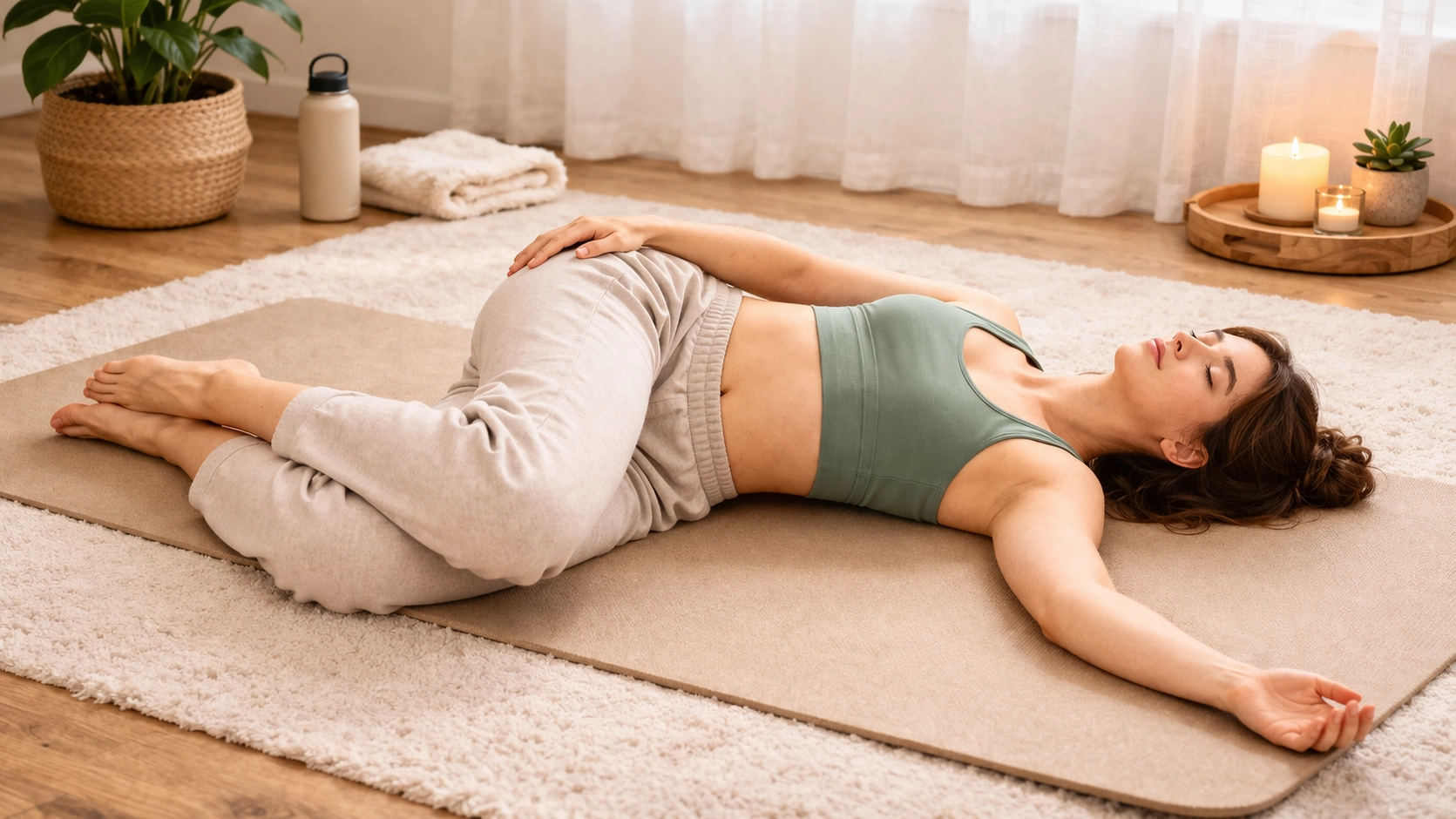
How to do it:
- Lie on your back.
- Hug one knee into your chest.
- Guide it across your body into a gentle twist.
- Extend the opposite arm out.
- Hold for 5 breaths, then switch sides.
Benefit: Great for winding down and supporting relaxation.
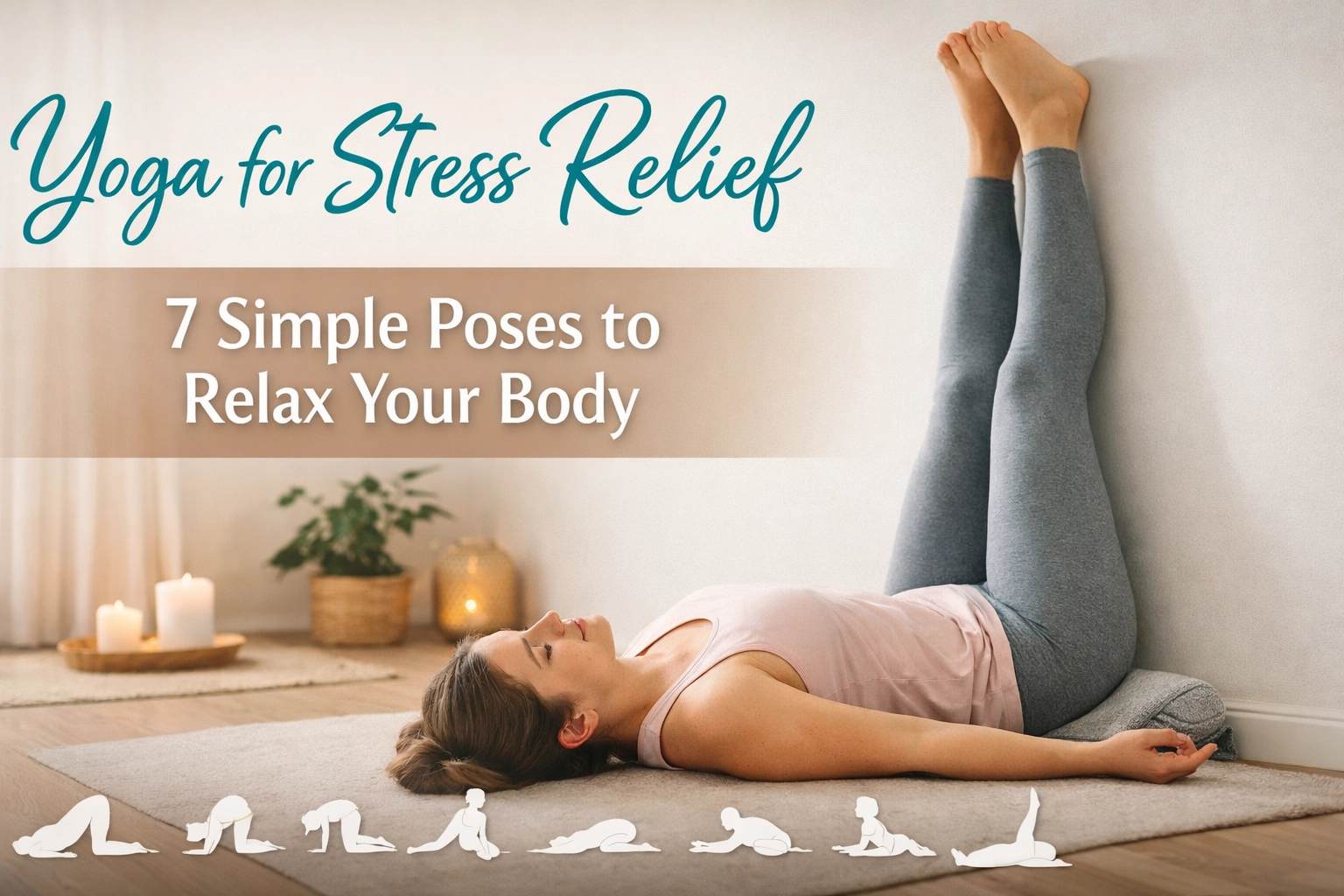
Legs Up the Wall
A simple restorative pose that helps reduce fatigue and calm the mind.
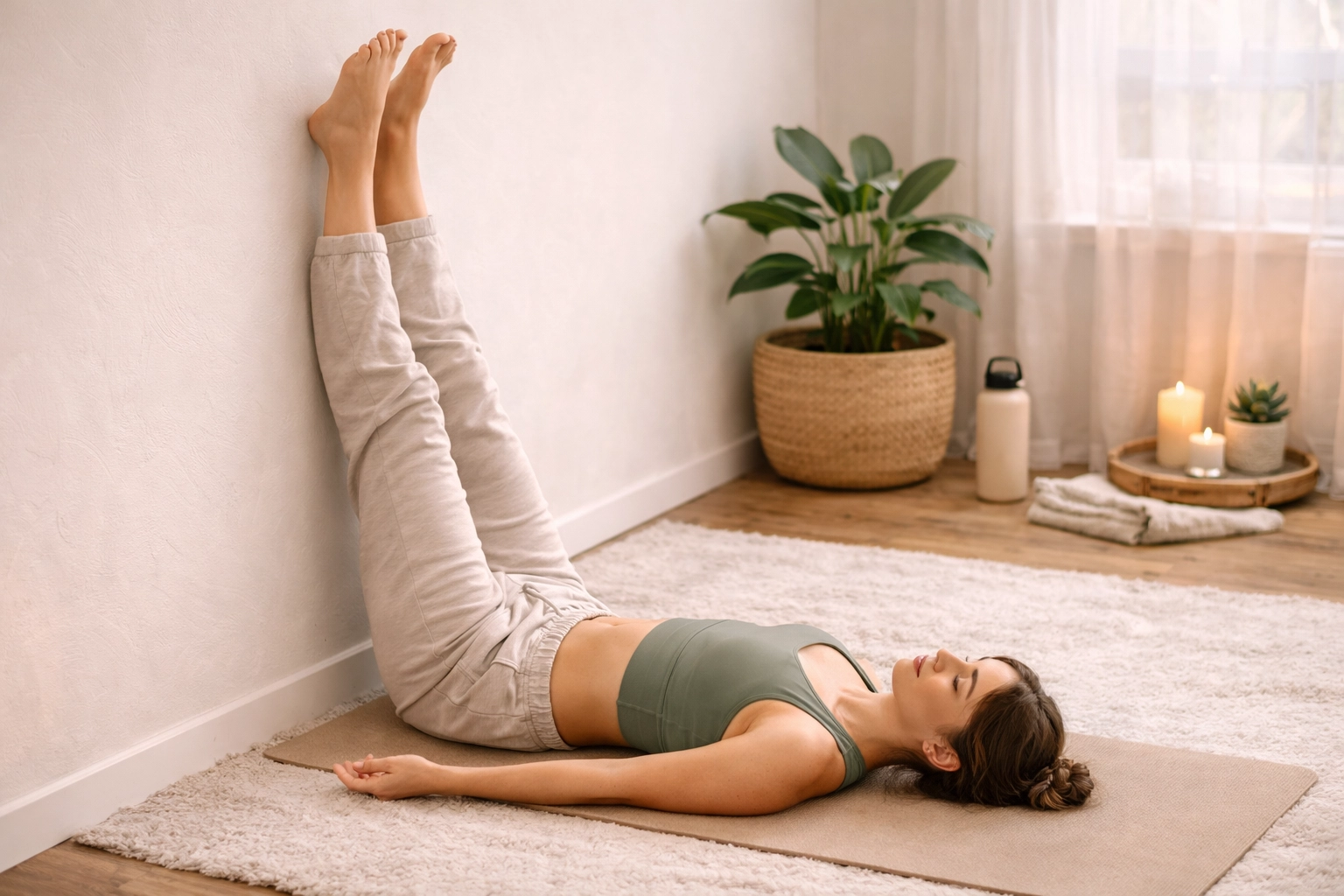
How to do it:
- Sit close to a wall.
- Swing your legs up as you lie back.
- Let your arms relax by your sides.
- Stay for 3 to 5 minutes.
Benefit: Excellent for yoga for stress relief, tired legs, and evening relaxation.
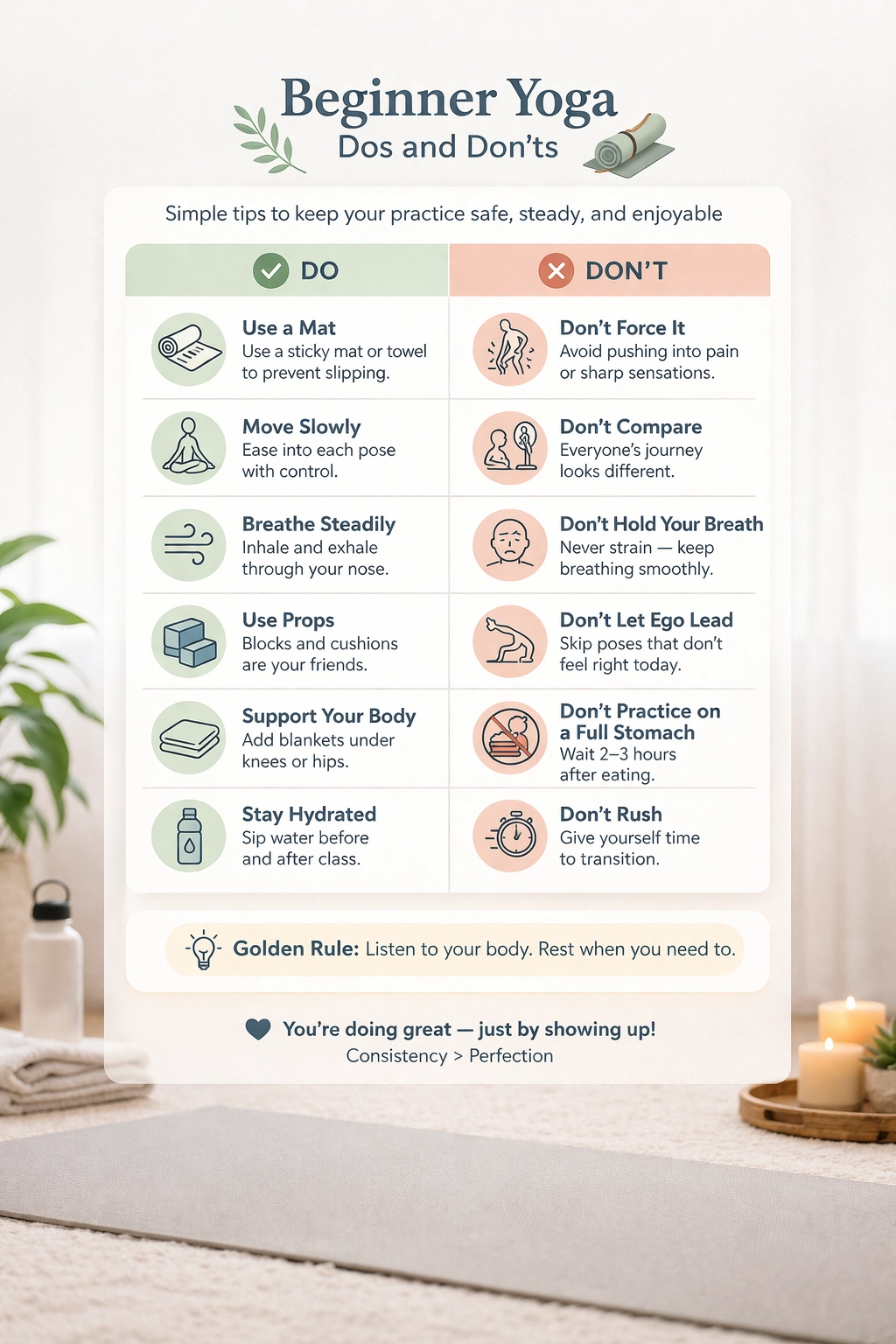
Tips for Beginners
Starting yoga should feel encouraging, not overwhelming. These beginner tips will help you build confidence and enjoy the process.
Go slow
You do not need to master every pose right away. Start with a few movements and focus on consistency.
Breathe naturally
Breathing is a key part of yoga. Try not to hold your breath. Slow, steady breathing helps your body relax into each pose.
Modify when needed
A small bend in the knees, a shorter hold, or a simpler version of a pose is still yoga. Listen to your body.
Practice regularly, not perfectly
A 10-minute daily yoga routine is often more effective than a long session once a week.
Wear comfortable clothing
Choose clothes you can move and breathe in easily. You do not need special yoga outfits.
Create a calming space
A quiet corner, soft light, and a few distraction-free minutes can make a big difference.
Common Mistakes to Avoid
When starting yoga for beginners, it helps to know what not to do.
1. Pushing too hard
Yoga is not about forcing your body deeper into a stretch. Overstretching can lead to discomfort or injury.
2. Comparing yourself to others
Your body is unique. Flexibility and balance improve over time, and everyone starts somewhere different.
3. Forgetting to breathe
Holding your breath often means you are pushing too hard or tensing up. Come back to slow breathing.
4. Skipping warm-up movements
Even gentle yoga feels better when you ease into it with movements like Cat-Cow or Child’s Pose.
5. Expecting instant results
You may feel calmer after one session, but flexibility, strength, and confidence build with regular practice.
6. Practicing with tension
Try to relax your face, shoulders, and jaw. Yoga works best when effort and ease are balanced.
Simple Daily Yoga Routine
Here is a beginner-friendly daily yoga routine you can do at home in about 10 to 15 minutes.
10–15 Minute Beginner Yoga Routine at Home
1. Child’s Pose – 1 minute
Settle into the practice and take slow breaths.
2. Cat-Cow Stretch – 1 minute
Warm up the spine and loosen tension.
3. Downward Dog – 1 minute
Stretch the back of the body and wake up the muscles.
4. Low Lunge – 1 minute each side
Open the hips and lengthen the body.
5. Seated Forward Fold – 1 minute
Gently stretch the hamstrings and calm the mind.
6. Supine Twist – 1 minute each side
Release the lower back and improve mobility.
7. Legs Up the Wall or Resting Pose – 2 to 3 minutes
Finish with stillness and deep breathing.
How often should beginners practice yoga?
For most beginners, 3 to 5 times per week is a great place to start. Even short sessions count. The goal is to make yoga feel like a supportive part of your wellness routine, not another item on your to-do list.
Morning or evening?
Both work well.
- Morning yoga can help energize your body and focus your mind
- Evening yoga can support stress relief and help you unwind
Choose the time that feels easiest to maintain.
How to Make Yoga a Consistent Wellness Habit
Building a home yoga practice is really about making it easy enough to repeat.
Try these simple habit tips:
The more positive and manageable the practice feels, the more likely you are to keep going.
Conclusion: Start Small and Let It Feel Good
You do not need fancy equipment, a perfect schedule, or advanced flexibility to begin. You only need a few minutes, a little floor space, and permission to start where you are.
This beginner yoga routine at home is a simple, gentle way to support your body and mind. With regular practice, yoga can help you improve flexibility, reduce stress, build strength, and create a more grounded daily rhythm.
Remember: yoga is not about doing it perfectly. It is about showing up, breathing deeply, and taking care of yourself one small step at a time.
Ready to Go Deeper?
If you want a simple, beautifully structured plan to help you stay consistent, download our Beginner Yoga PDF Guide / Beginner Program. It includes easy routines, pose guidance, and a step-by-step wellness practice designed to help you feel calmer, stronger, and more flexible at home.
Call to action:
Download your Yoga PDF guide today and start building a calm, beginner-friendly home practice you will actually enjoy.