Have you ever thought, “I’m not flexible enough for yoga”?
You’re not alone.
Many women want to feel more flexible, less stressed, and more comfortable in their bodies — but yoga can feel intimidating at first. The poses look advanced, the routines seem long, and it’s easy to assume you need to be fit or naturally bendy before you begin.
The good news? You do not need to be flexible to start yoga. In fact, yoga is one of the best ways to become more flexible.
A simple 14-day beginner yoga for flexibility plan can help you feel more open, calm, and energized — without pressure, confusion, or intense workouts.
In this article, you’ll learn why flexibility matters, why beginners often struggle to stay consistent, and how a structured 14-day yoga routine can help you build a realistic wellness habit at home.
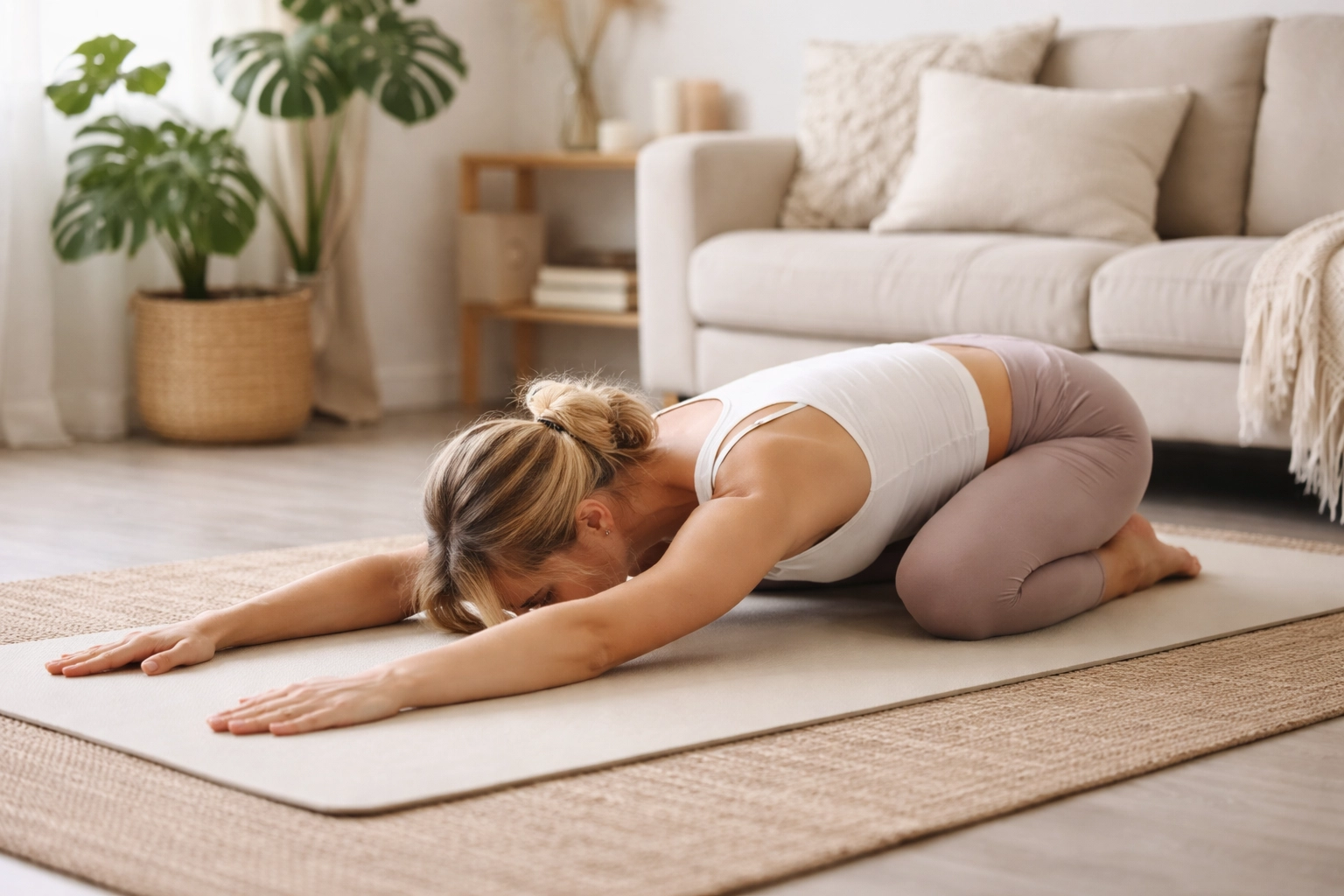
Why So Many Beginners Feel Stiff and Overwhelmed
Modern life makes the body tight.
Long hours sitting, working at a desk, driving, carrying stress in your shoulders, and moving less than your body needs can all lead to stiffness and discomfort.
You may notice it in your:
And the frustrating part is that once your body feels tight, movement can feel even harder to begin.
Common beginner struggles include:
This is exactly why a short, structured yoga challenge works so well. It removes the guesswork and gives you a gentle starting point.
Why Yoga Is So Effective for Flexibility
Yoga improves flexibility in a way that feels supportive rather than extreme.
Instead of forcing deep stretches, yoga combines:
That matters because flexibility is not only about muscles. When you are stressed, your body becomes more tense. Yoga helps release that tension physically and mentally.
Benefits of beginner yoga for flexibility:
1. It targets common tight areas
Most beginner yoga poses help open the hips, hamstrings, spine, chest, and shoulders.
2. It helps reduce stress-related tension
Deep breathing encourages the body to relax, making stretching feel easier and safer.
3. It improves mobility and strength together
Good flexibility is supported by strength. Yoga helps you build both.
4. It is beginner-friendly and accessible
You can practice at home, go at your own pace, and start with just a few minutes a day.
What You Can Realistically Expect in 14 Days
Let’s keep expectations realistic: in two weeks, you probably will not do the splits.
But you can feel a real difference.
With a consistent beginner yoga routine, many women notice:
And perhaps most importantly, you begin building trust in yourself again.
That feeling of “I’m actually doing this” is often the first big win.
The Secret to Better Flexibility: Consistency, Not Intensity
This is where many beginners go wrong.
They assume they need long sessions, advanced poses, or intense stretching to see results.
They do not.
Small daily practice is more effective than occasional overdoing.
Even 10–15 minutes a day can help your body gradually open up when you stay consistent.
Focus on:
A 14-day plan works because it keeps things simple. You do not have to decide what to do every day — you just follow the structure.
A Simple 14-Day Beginner Yoga Structure
A good beginner flexibility plan should feel calm, realistic, and encouraging.
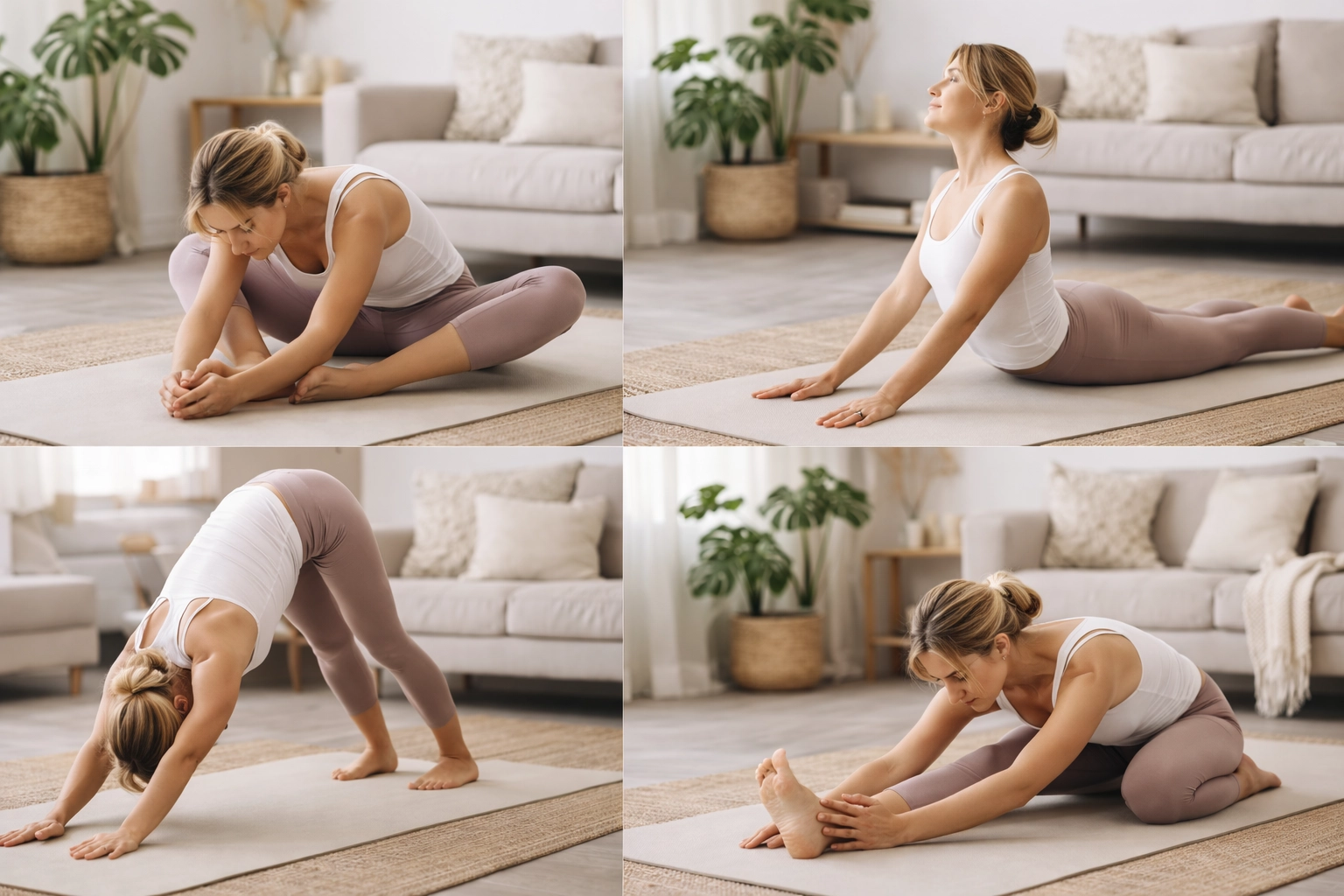
Days 1–4: Release tension and build confidence
Start with simple poses that help you reconnect with your body and ease into movement.
Examples:
Goal: feel safe, comfortable, and consistent.
Days 5–8: Improve mobility in tight areas
Now you can begin working a little more deeply into the hips, hamstrings, shoulders, and spine.
Examples:
Goal: create more space in the body without forcing.
Days 9–11: Build strength with flexibility
This stage introduces supportive standing poses and simple flows to combine mobility and stability.
Examples:
Goal: create flexibility that feels strong and functional.
Days 12–14: Deepen gently and reinforce the habit
In the final days, the focus is on enjoying the practice, improving confidence, and ending with calming stretches.
Examples:
Goal: finish feeling proud, open, and motivated to continue.
Beginner Mistakes to Avoid
If you want better results from your yoga journey, avoid these common mistakes:
1. Forcing the stretch
Yoga should feel supportive, not painful. Sharp pain is a sign to stop or modify.
2. Comparing yourself to others
Your flexibility journey is personal. Progress does not need to look dramatic to be real.
3. Holding your breath
Breathing deeply helps your body release tension. Never sacrifice breath for depth.
4. Skipping too many days
A little practice often works better than one long session once a week.
5. Expecting instant transformation
Flexibility grows gradually. The key is staying patient and consistent.

Yoga Supports More Than Just Flexibility
One of the best things about starting yoga is that the benefits go beyond stretching.
Many beginners come for flexibility — but stay for the way yoga makes them feel.
Yoga can also help with:
That is what makes yoga such a powerful wellness habit.
It is not just exercise. It is a form of self-care that supports both body and mind.
Why a PDF Guide Makes It Easier to Stay Consistent
Let’s be honest: most people do not struggle because they lack motivation.
They struggle because they lack structure.
When there are too many videos, too many routines, and too much conflicting advice online, it becomes easy to overthink everything and do nothing.
A well-designed PDF guide makes things simpler.
With a structured yoga PDF, you get:
That clarity can make all the difference between wanting to start and actually following through.
Who This 14-Day Beginner Yoga for Flexibility Plan Is For
This kind of yoga plan is perfect if you:
You do not need experience.
You do not need expensive equipment.
You do not need to be naturally flexible.
You simply need a place to begin.
Imagine How You Could Feel After 14 Days
Imagine waking up and feeling a little lighter.
Your hips are less tight.
Your shoulders feel softer.
Your back feels more comfortable.
You move more easily.
You feel calmer and more connected to your body.
And maybe even more importantly — you feel proud of yourself for starting.
That is what a short yoga challenge can do.
It creates momentum.
And once you begin feeling the difference, continuing becomes so much easier.
-
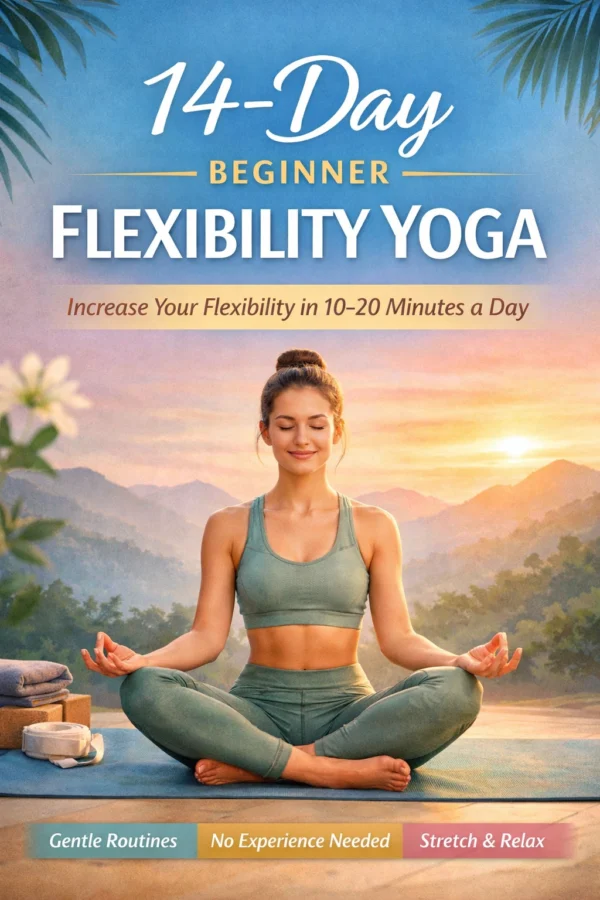
14-Day Beginner Yoga for Flexibility
Original price was: $19.99.$12.99Current price is: $12.99.
Ready to Start Your Beginner Yoga Journey?
You do not need the perfect time.
You do not need to get fitter first.
You do not need to wait until life feels less busy.
You can begin now — gently, simply, and one day at a time.
A 14-Day Beginner Yoga for Flexibility PDF Guide can help you stay consistent with a structured, easy-to-follow routine designed especially for beginners.
Instead of guessing what to do each day, you can follow a clear plan that helps you feel looser, calmer, and more confident at home.
Start Your 14-Day Yoga Journey Today
Looking for a simple, beginner-friendly routine you can follow at home? The 14-Day Beginner Yoga for Flexibility PDF Guide is designed to help you build flexibility gently, reduce stress, and feel more comfortable in your body — one day at a time.
Final Thoughts
You do not need to be naturally flexible to start yoga.
You do not need advanced poses, long workouts, or perfection.
You only need a gentle first step.
Flexibility is built through patience, repetition, and consistency. And yoga is one of the most supportive ways to begin.
In just 14 days, you may start to feel more open, more relaxed, and more connected to your body — and that is a beautiful place to begin.