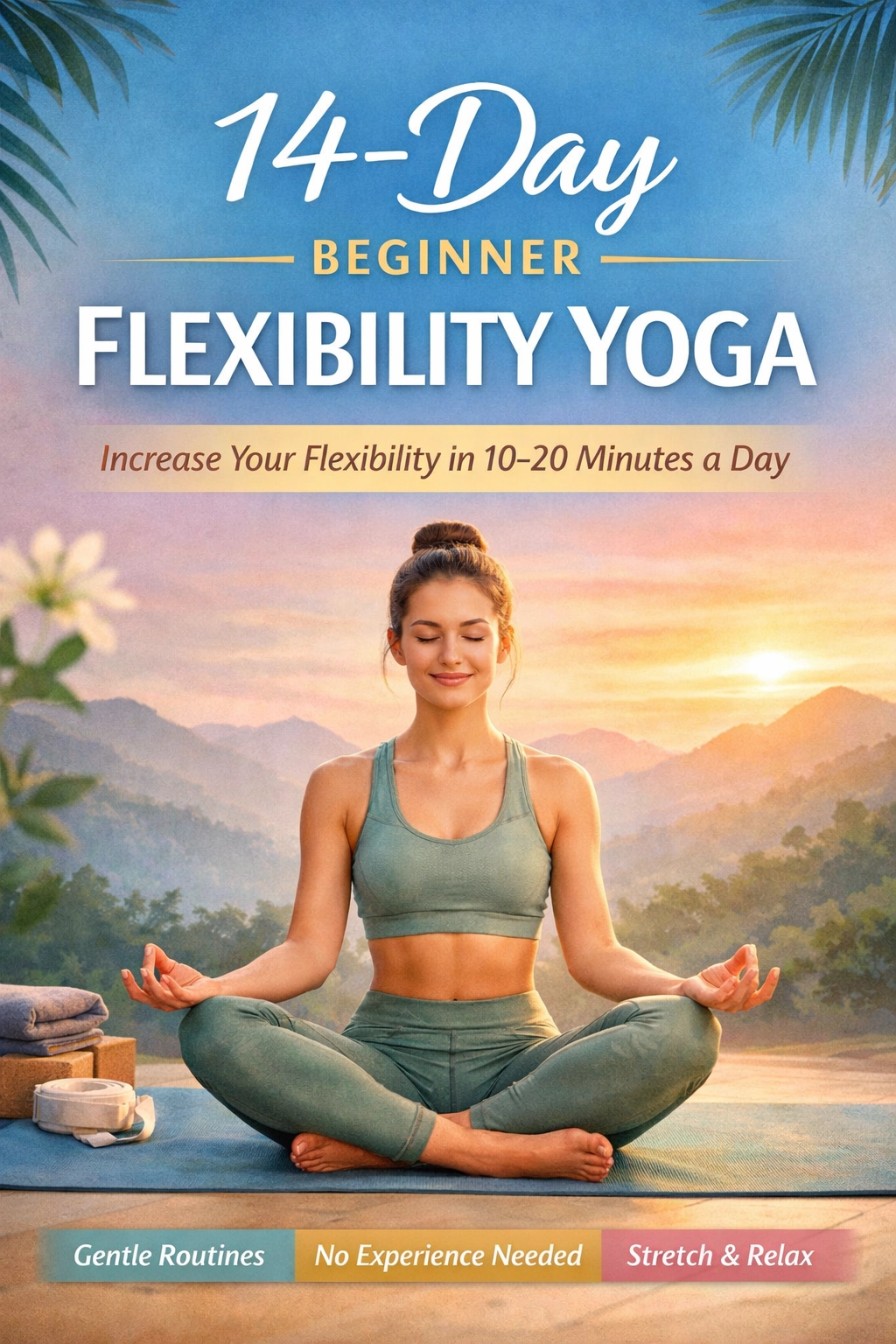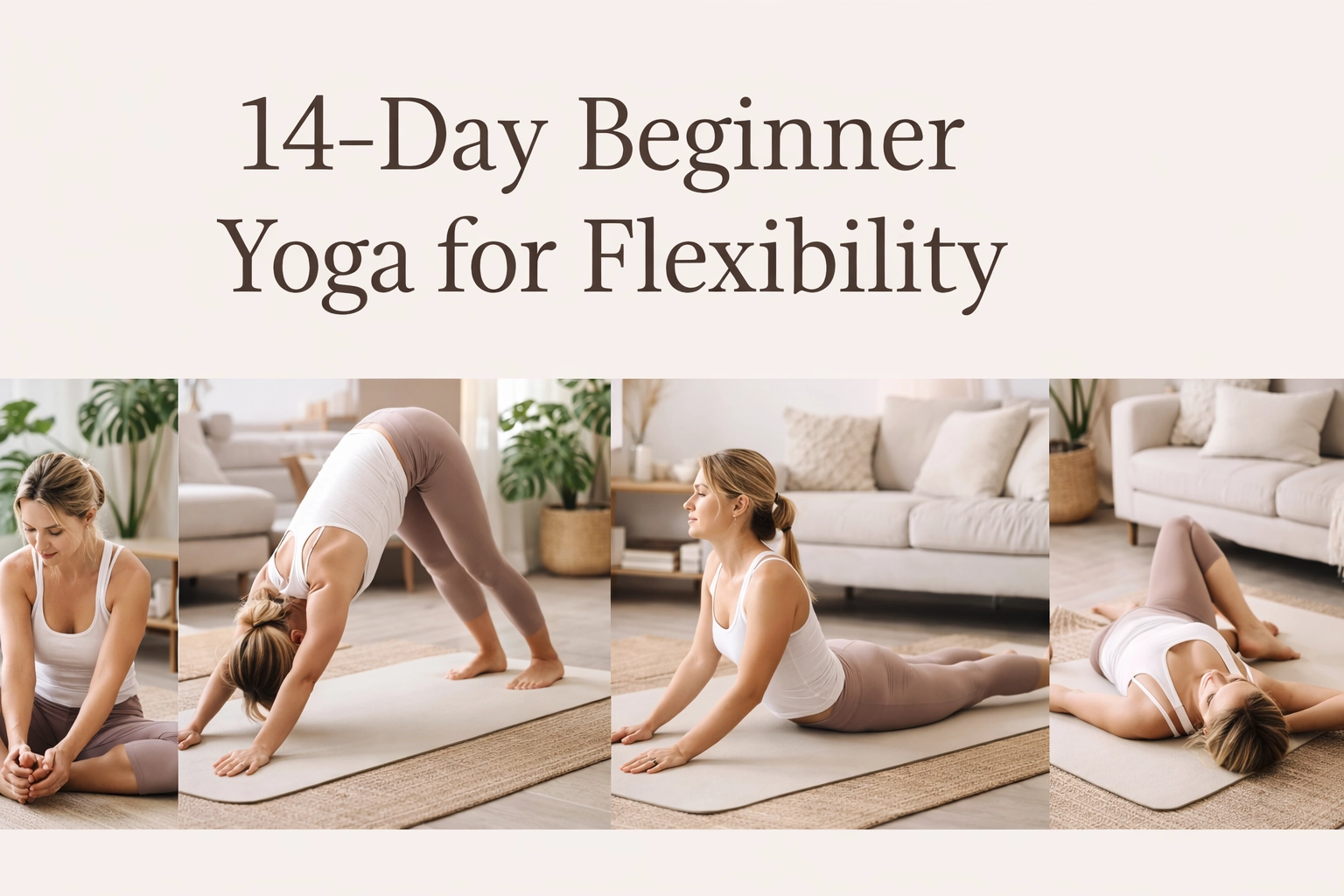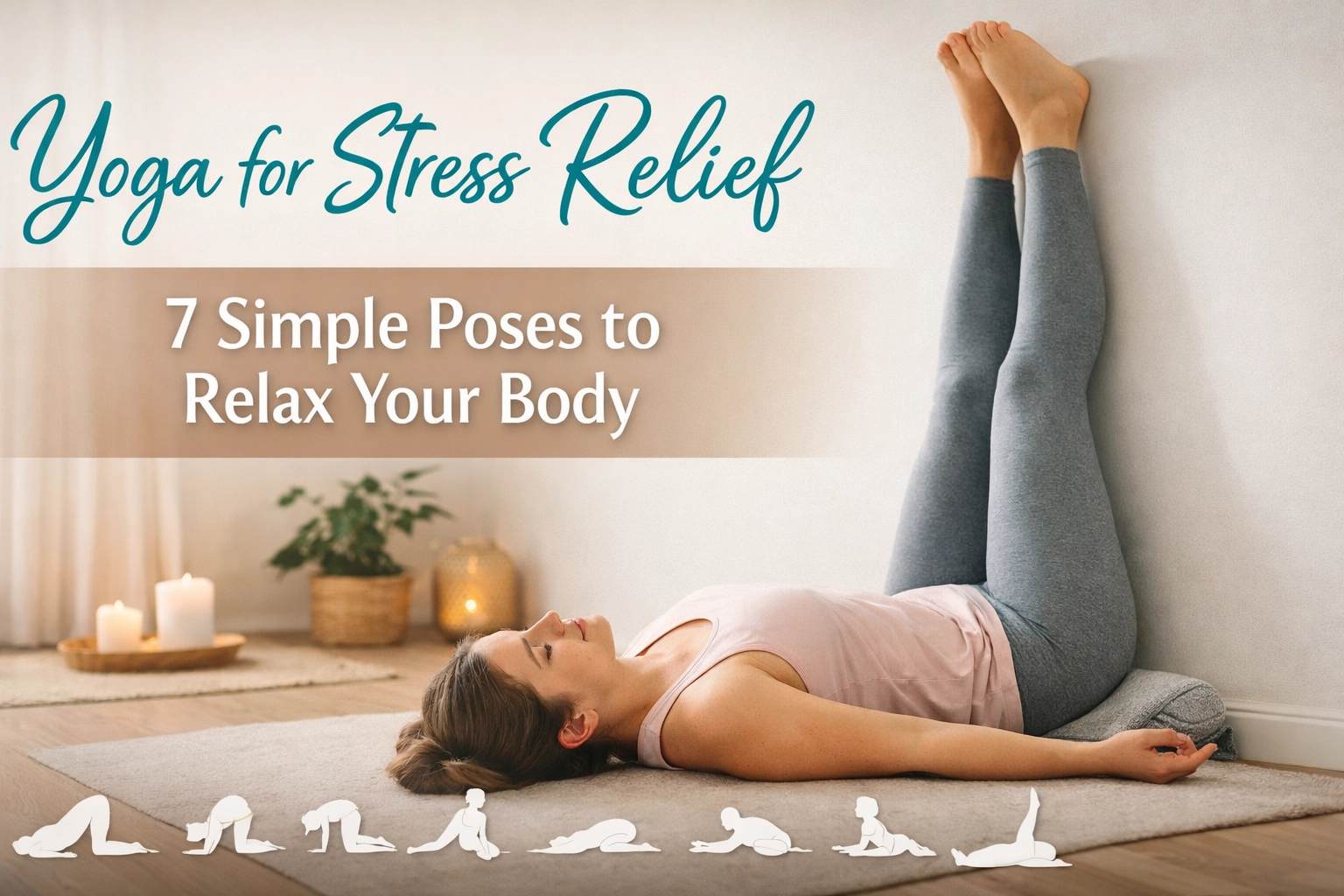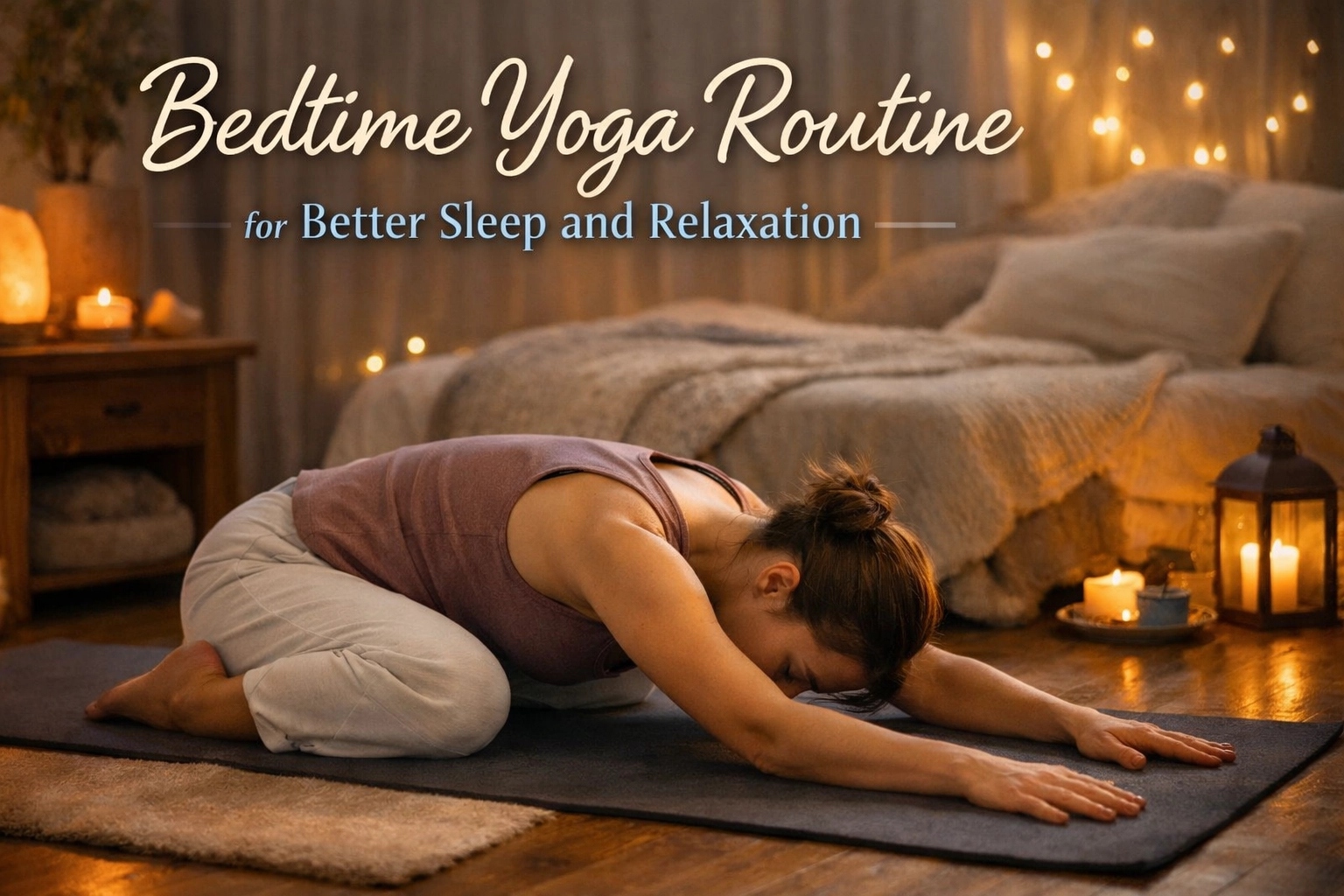
Life gets full fast. Between work, family, errands, screens, and the constant feeling of being “on,” wellness can start to feel like one more thing on an already packed to-do list. That is exactly why a 10-minute daily yoga routine can be so powerful. It is simple, realistic, beginner-friendly, and surprisingly effective.
You do not need a full home studio, expensive equipment, or an hour of free time to enjoy the benefits of yoga. With just a few minutes a day, you can improve flexibility, reduce stress, boost energy, and feel more connected to your body. For busy women who want a healthier lifestyle without overwhelming routines, yoga offers a gentle but powerful reset.
This guide is designed for women ages 25–45 who want an easy, sustainable wellness habit. Whether you are completely new to yoga or coming back after a long break, this article will show you how to build a calming and energizing practice that fits into real life.
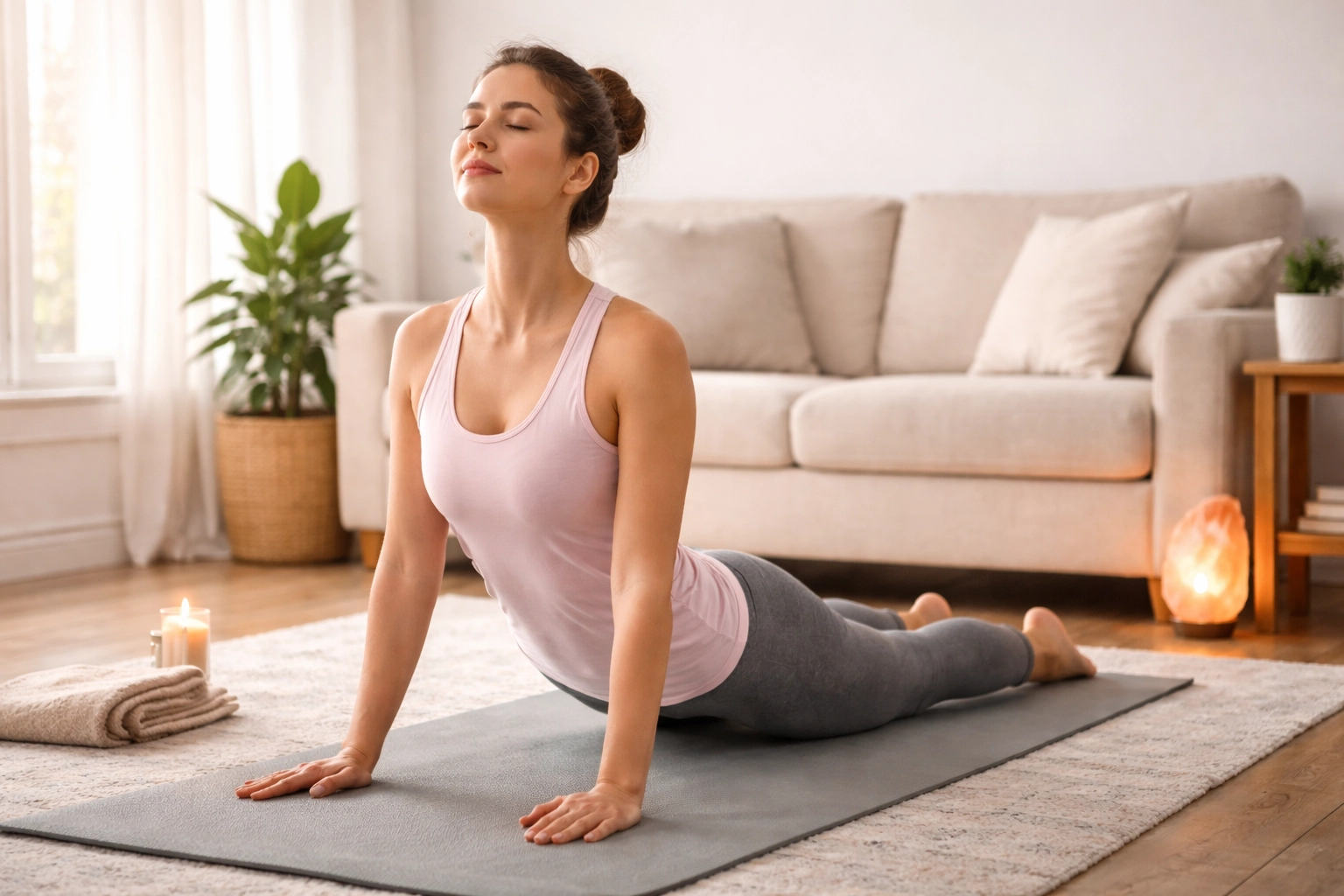
Why a 10-Minute Daily Yoga Routine Works
One of the biggest myths about yoga is that it only “counts” if you do a long class. In reality, consistency matters more than duration. A short daily yoga routine can be more effective than doing a long practice once in a while.
Ten minutes is manageable. It feels possible even on busy mornings, lunch breaks, or evenings before bed. And because it is easier to stick with, it helps you build a real habit.
A short yoga session can help you:
- Wake up your body
- Improve mobility and flexibility
- Release tension from sitting all day
- Calm a stressed mind
- Support better posture
- Create a few quiet minutes just for yourself
That is why yoga for beginners is often best started in small, simple steps.
Benefits of Yoga for Body and Mind
Yoga is much more than stretching. It combines movement, breathing, and body awareness, which makes it especially helpful for both physical and mental well-being.
Yoga improves flexibility
One of the most well-known benefits of yoga for flexibility is that it helps lengthen tight muscles and improve range of motion over time. This can be especially helpful if you sit for long hours, feel stiff in your hips or back, or notice tension in your shoulders and neck.
Even a few simple yoga poses practiced regularly can help your body feel more open and comfortable.
Yoga supports stress relief
If your mind feels busy all day, yoga can help you slow down. The combination of steady breathing and mindful movement activates the body’s relaxation response. That is why many people turn to yoga for stress relief when they feel overwhelmed, anxious, or mentally drained.
Yoga strengthens the body gently
Yoga is not only about stretching. Many poses build strength in the legs, core, back, and arms. Over time, that can support better posture, balance, and daily movement.
Yoga helps posture and reduces tension
Modern life often means more time hunched over laptops and phones. A regular daily yoga routine can help open the chest, lengthen the spine, and reduce tightness in the neck, shoulders, and lower back.
Yoga encourages better mind-body connection
Yoga teaches you to notice how your body feels. That awareness can help you move more intentionally, rest when needed, and make healthier choices overall.
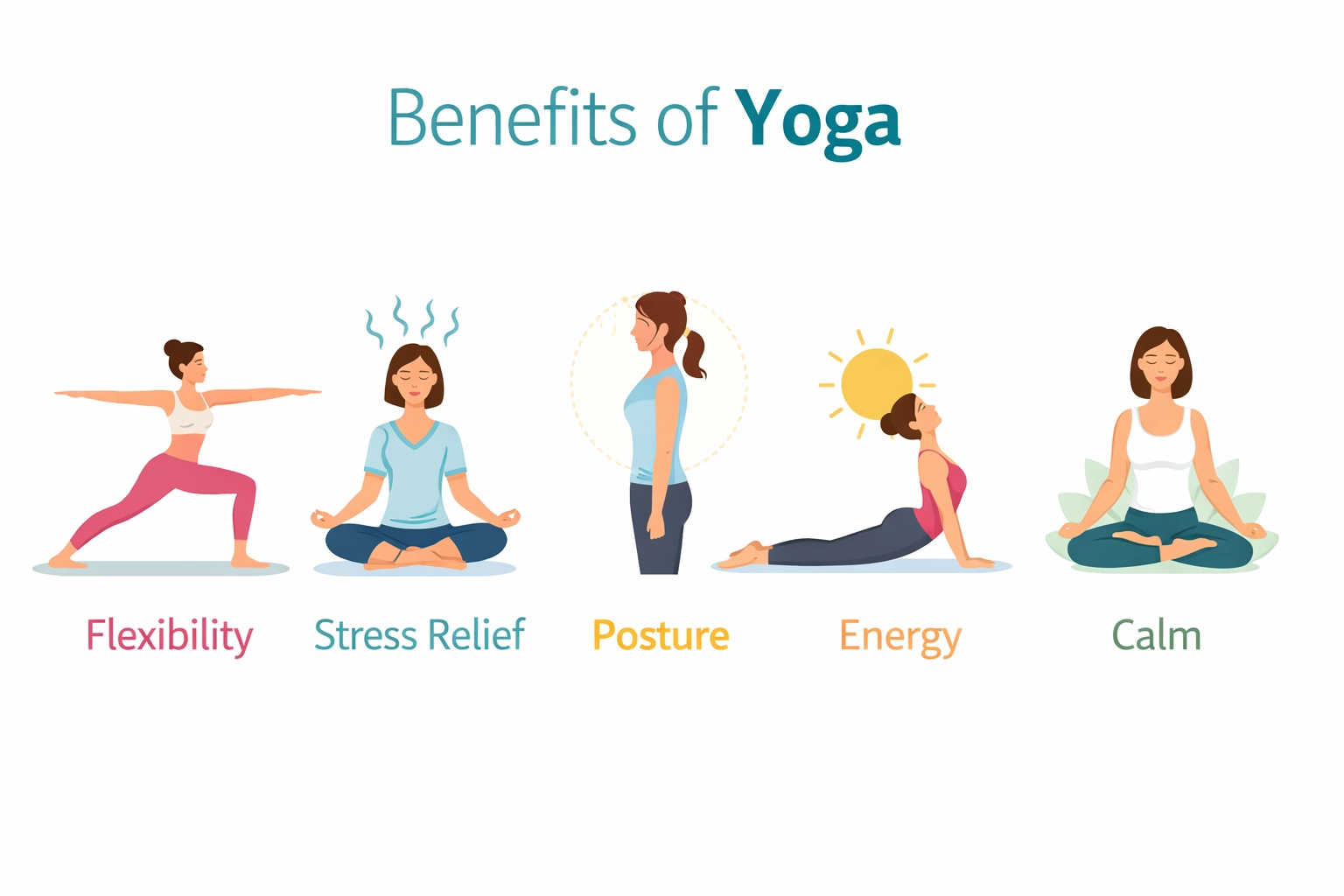
A Simple Wellness Explanation: How Yoga Helps the Body and Mind
Yoga supports wellness in a very practical way. Physically, stretching and holding poses can improve circulation, mobility, joint function, and muscle balance. Mentally, slow breathing can help calm the nervous system and shift the body away from a stressed “fight or flight” mode into a more relaxed state.
This is one reason yoga often leaves people feeling both energized and grounded. You move your body, but you also slow your breathing and focus your attention. That combination can support better mood, lower tension, and a greater sense of balance throughout the day.
For busy women, this matters. A short yoga practice is not only exercise. It is also a reset button.
The Best 10-Minute Daily Yoga Routine for Busy Women
This beginner-friendly sequence is designed to be easy, calming, and effective. It focuses on mobility, flexibility, posture, and stress relief without requiring advanced skills.
You can do it in the morning to wake up, in the afternoon to break up desk time, or in the evening to unwind.
Before You Start
Here are a few quick tips:
- Wear comfortable clothes
- Use a yoga mat or soft surface
- Move slowly and breathe naturally
- Never force a stretch
- Focus on how the pose feels, not how it looks
1. Child’s Pose – 1 minute
Child’s Pose is one of the best simple yoga poses for beginners. It helps calm the mind and gently stretches the hips, back, and shoulders.
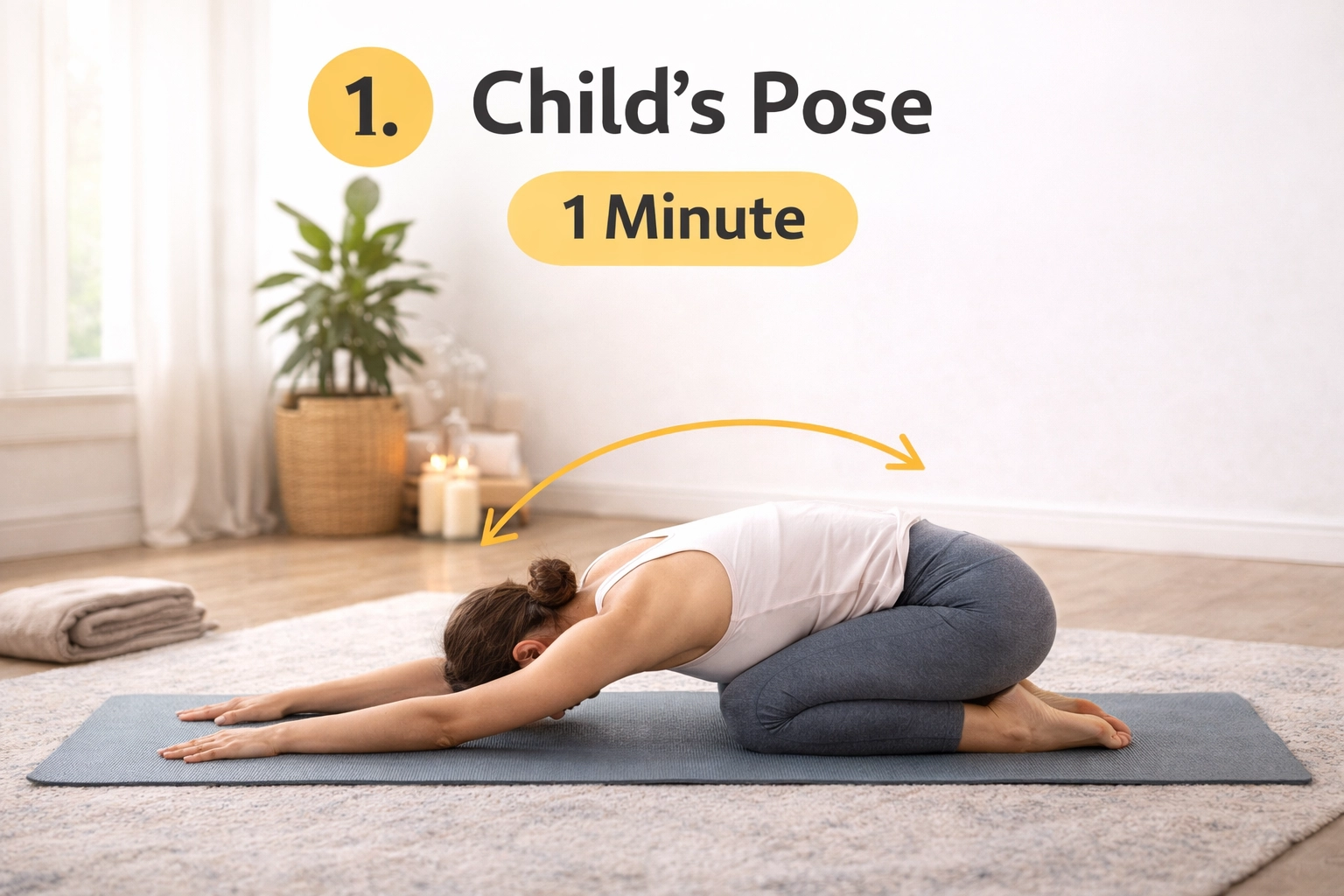
How to do it:
- Kneel on the mat
- Bring your big toes together and knees apart
- Sit your hips back toward your heels
- Stretch your arms forward and rest your forehead down
- Take slow, deep breaths
Why it helps:
This pose creates a sense of safety and relaxation while gently releasing back tension.
2. Cat-Cow Stretch – 1 minute
This gentle flow warms up the spine and helps improve mobility in the back and neck.
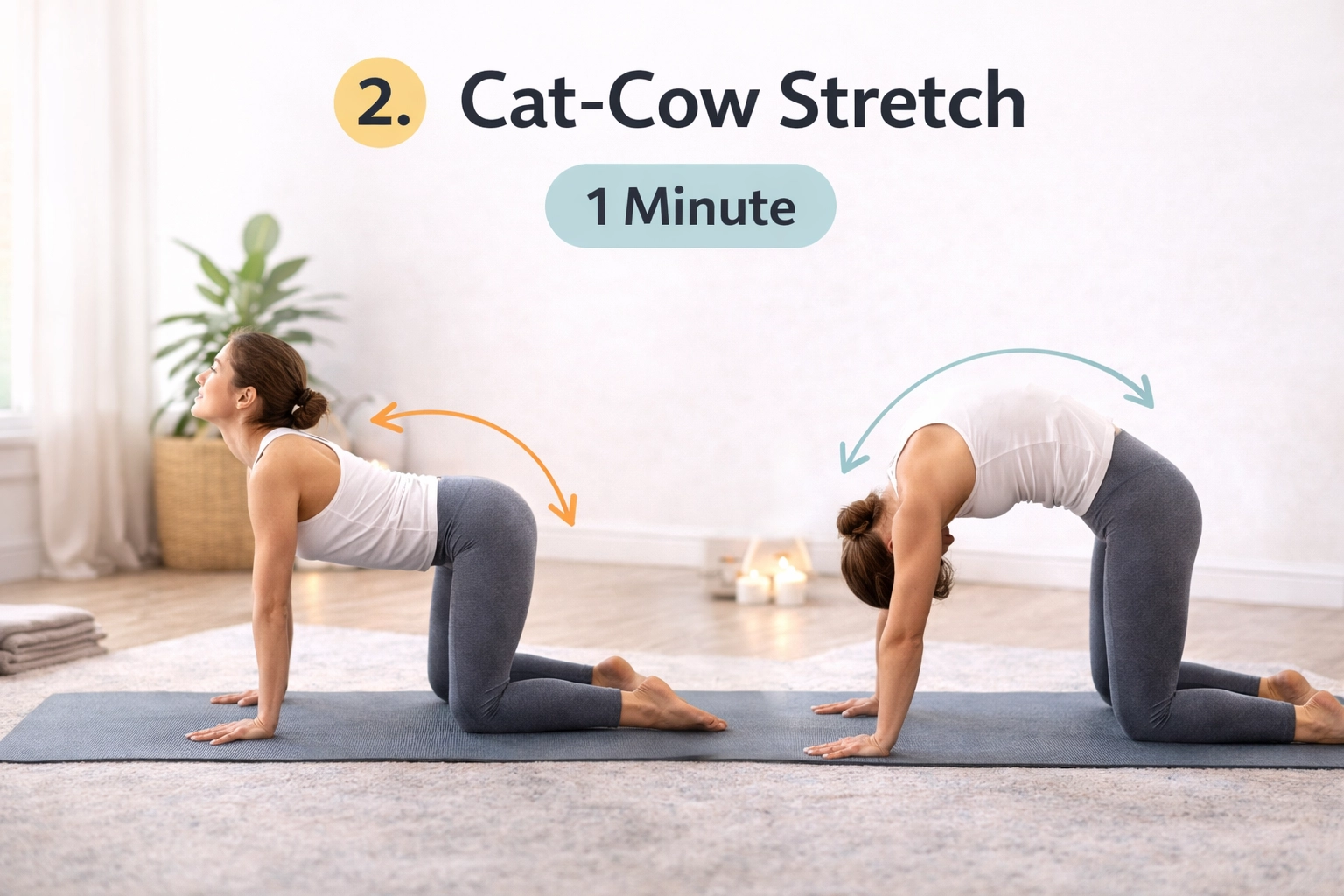
How to do it:
- Come onto hands and knees
- Inhale, lift your chest and tailbone for Cow Pose
- Exhale, round your spine and tuck your chin for Cat Pose
- Continue slowly with your breath
Why it helps:
Cat-Cow is excellent for stiffness from sitting and helps bring awareness to spinal movement.
3. Downward Dog – 1 minute
Downward Dog is a classic pose often included in yoga for beginners because it stretches the whole body.
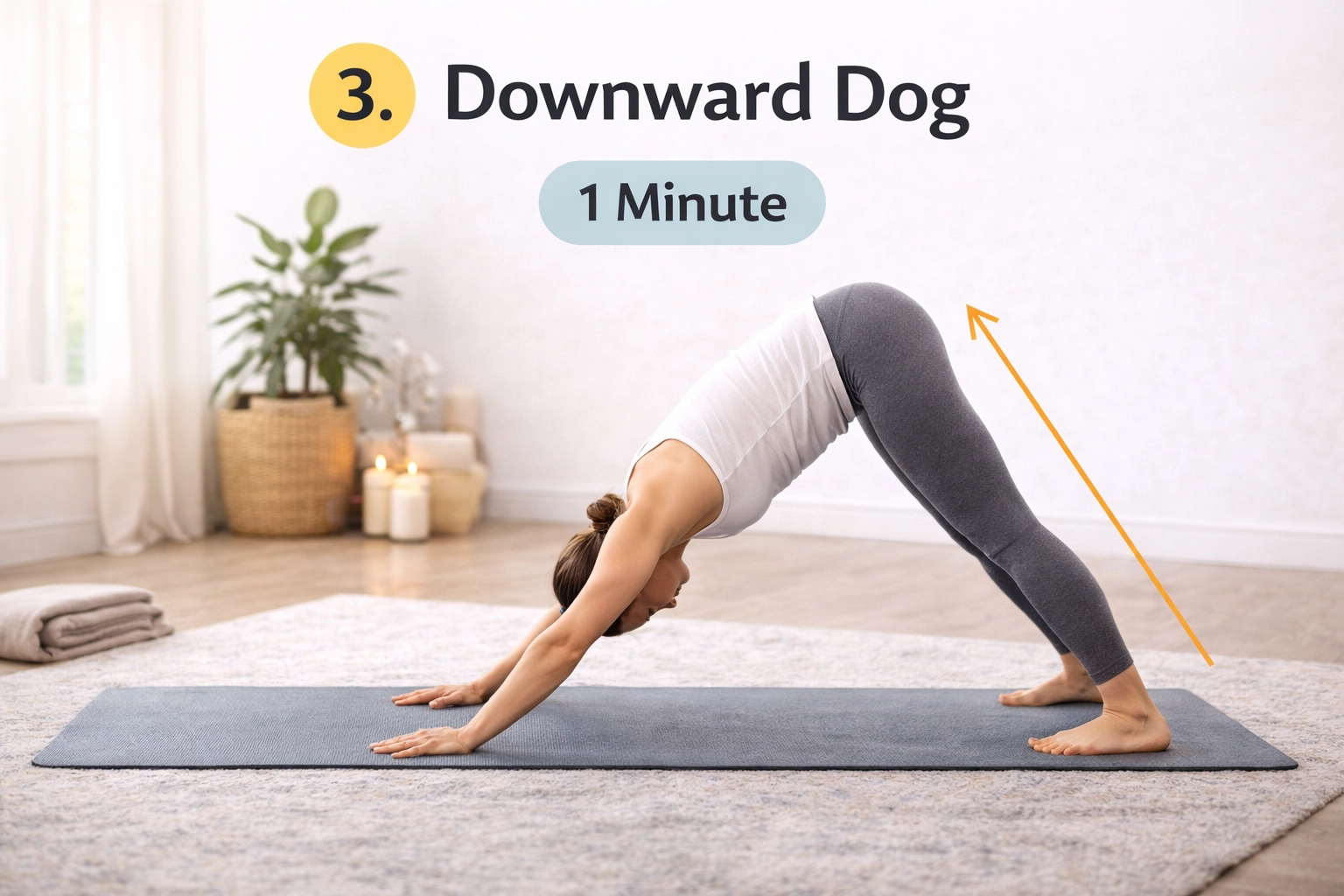
How to do it:
- From hands and knees, tuck your toes under
- Lift your hips up and back
- Keep your knees bent if needed
- Press your hands firmly into the mat
- Relax your neck
Why it helps:
This pose stretches the hamstrings, calves, shoulders, and back while gently building strength.
4. Low Lunge – 1 minute each side
This is a great pose for opening tight hips, especially if you sit a lot.
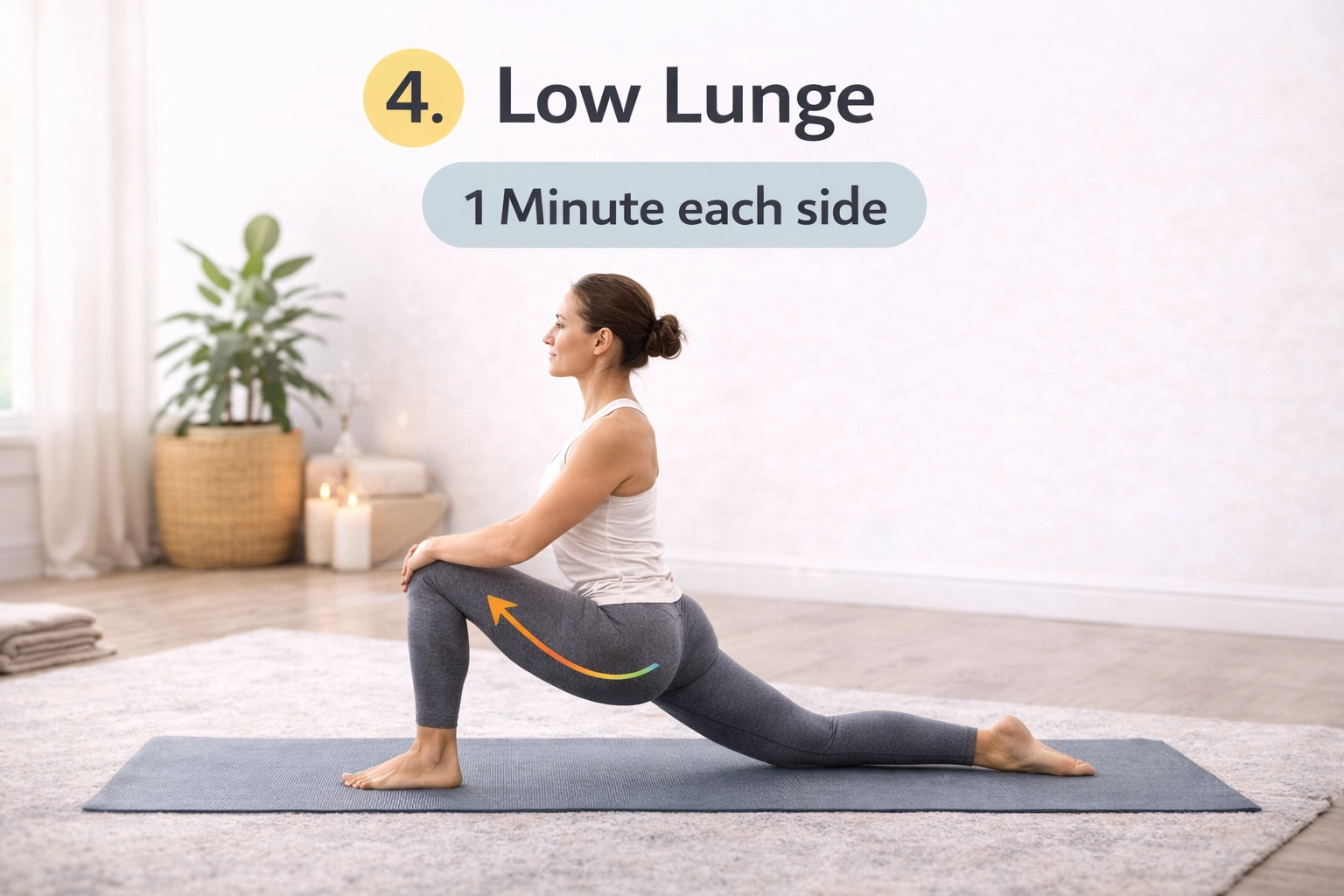
How to do it:
- Step one foot forward between your hands
- Lower the back knee to the mat
- Keep your front knee stacked over your ankle
- Lift your chest and rest your hands on your thigh
Why it helps:
Low Lunge improves hip flexibility and helps counteract long hours of sitting.
5. Seated Forward Fold – 1 minute
This pose helps stretch the back body and encourages a calm, inward focus.
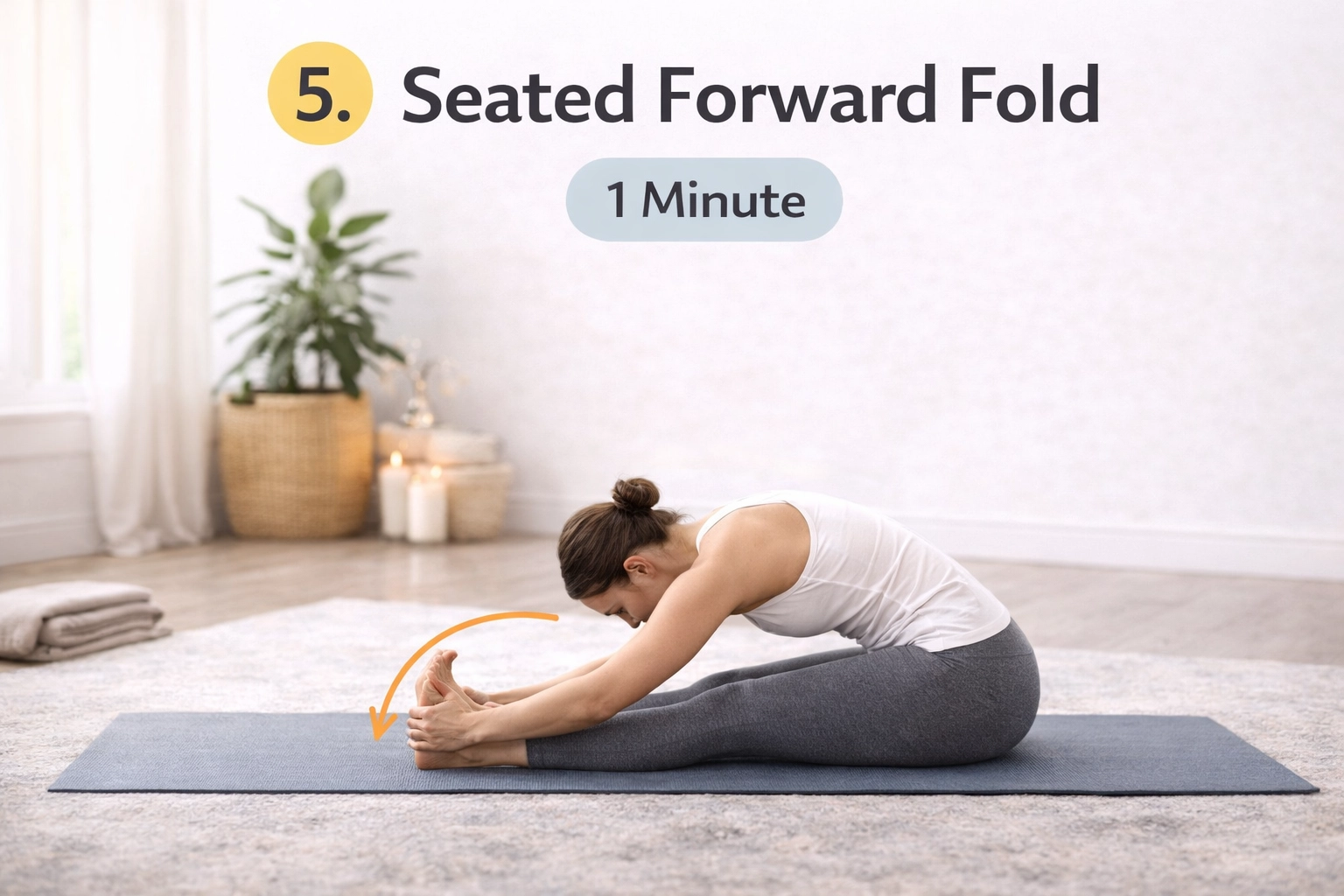
How to do it:
- Sit with your legs extended
- Keep a soft bend in the knees if needed
- Hinge forward from the hips
- Rest your hands on your legs, ankles, or feet
Why it helps:
This is a gentle pose for hamstrings, lower back, and mental relaxation.
6. Supine Twist – 1 minute each side
A gentle spinal twist can feel amazing at the end of a short practice.
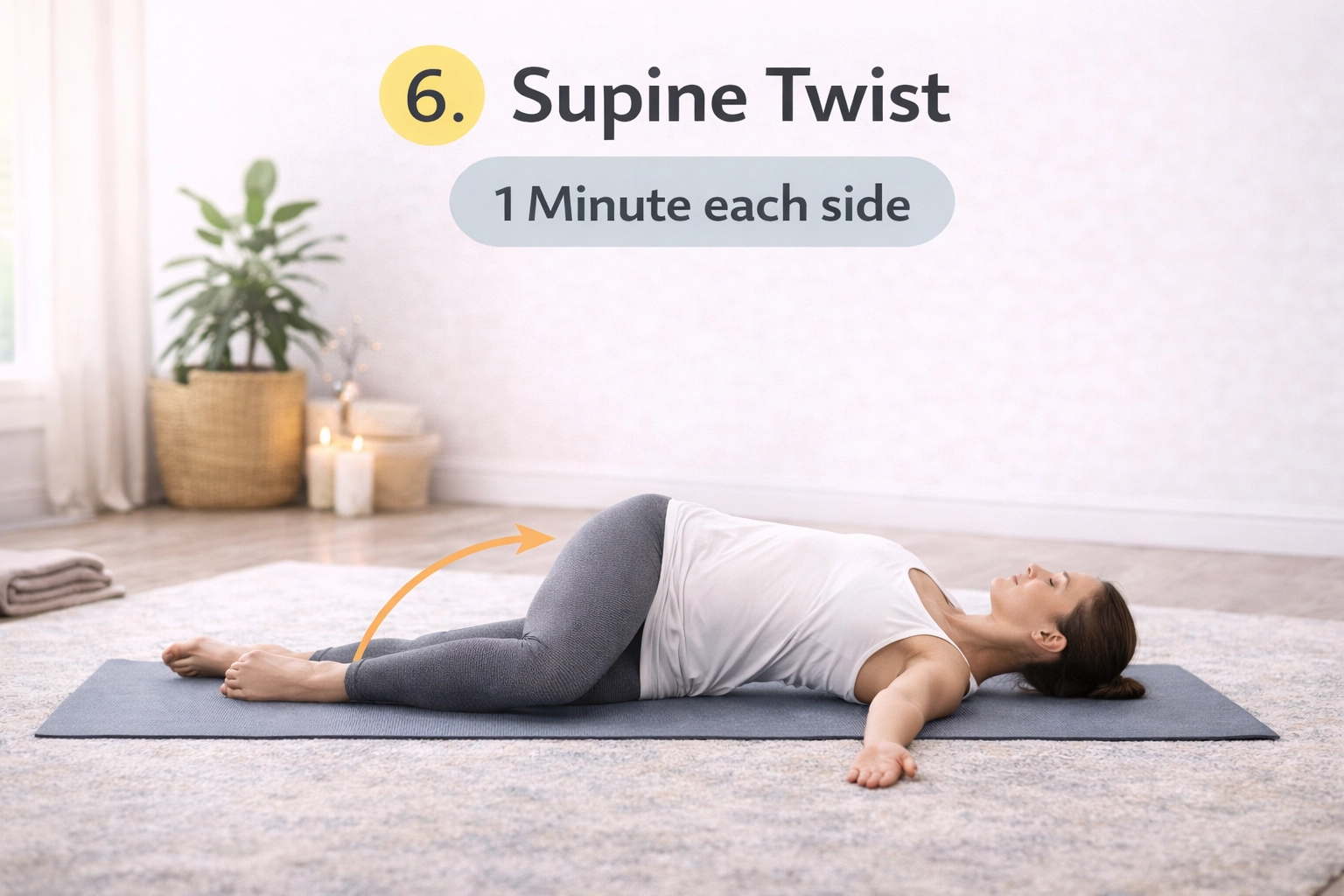
How to do it:
- Lie on your back
- Hug one knee into your chest
- Guide it across your body
- Extend the opposite arm out
- Keep both shoulders heavy on the mat
Why it helps:
This pose releases back tension and helps you feel grounded.
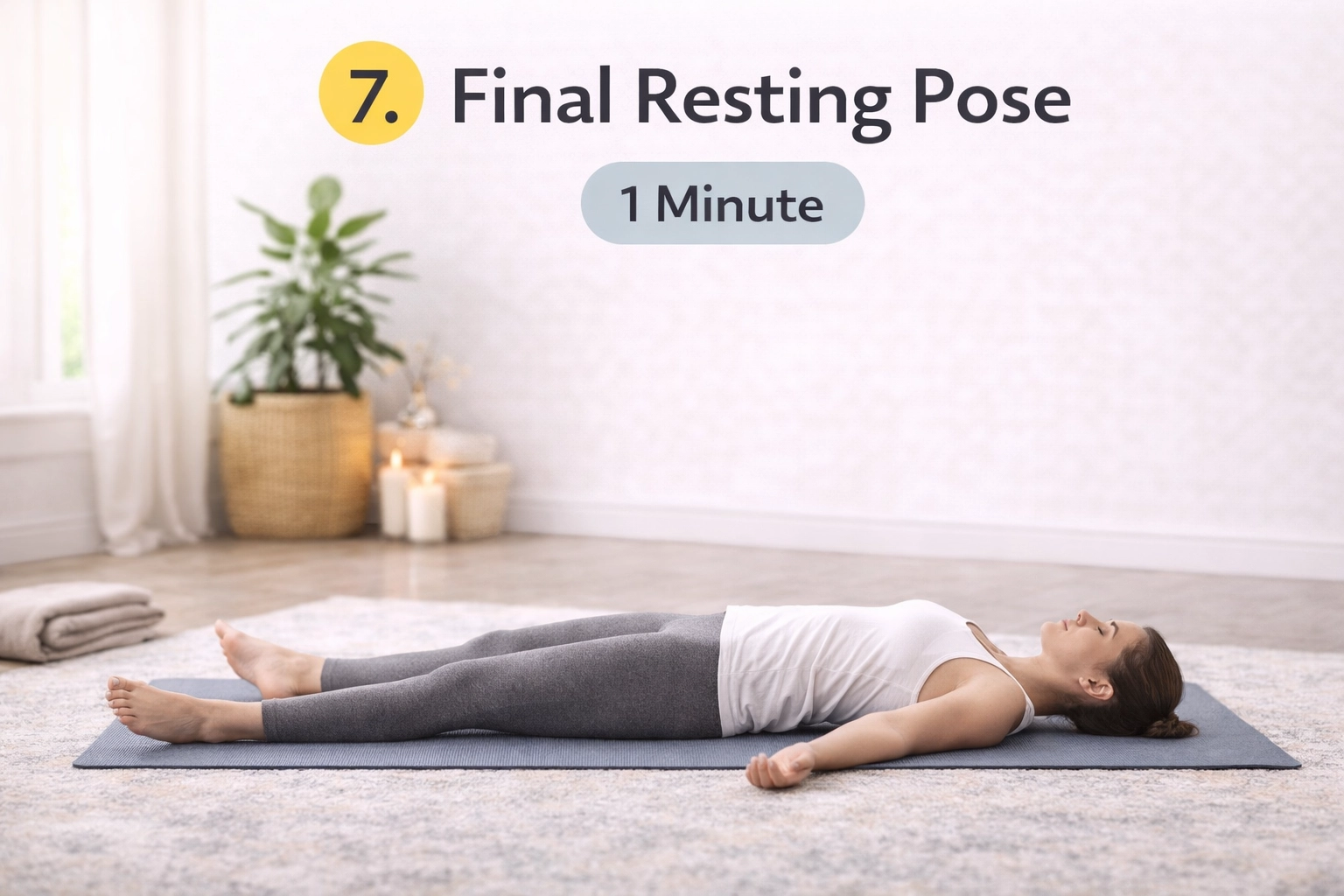
7. Final Resting Pose – 1 minute
Finish by lying flat on your back, arms relaxed by your sides, and breathing slowly.
Why it helps:
This final pause gives your body and mind time to absorb the benefits of the practice.
Tips for Beginners
Starting yoga does not have to feel intimidating. The key is to keep it simple and consistent.
Focus on consistency, not perfection
Doing 10 minutes a day is more valuable than doing an intense workout once and quitting. Let your practice be easy enough to repeat.
Breathe slowly
Breathing is one of the most important parts of yoga. Try not to hold your breath. Slow, steady breathing helps your body relax into the poses.
Modify when needed
You do not need to straighten every leg or touch your toes. Bend your knees, use a cushion, or reduce the range of motion. Beginner yoga should feel supportive, not punishing.
Create a calming space
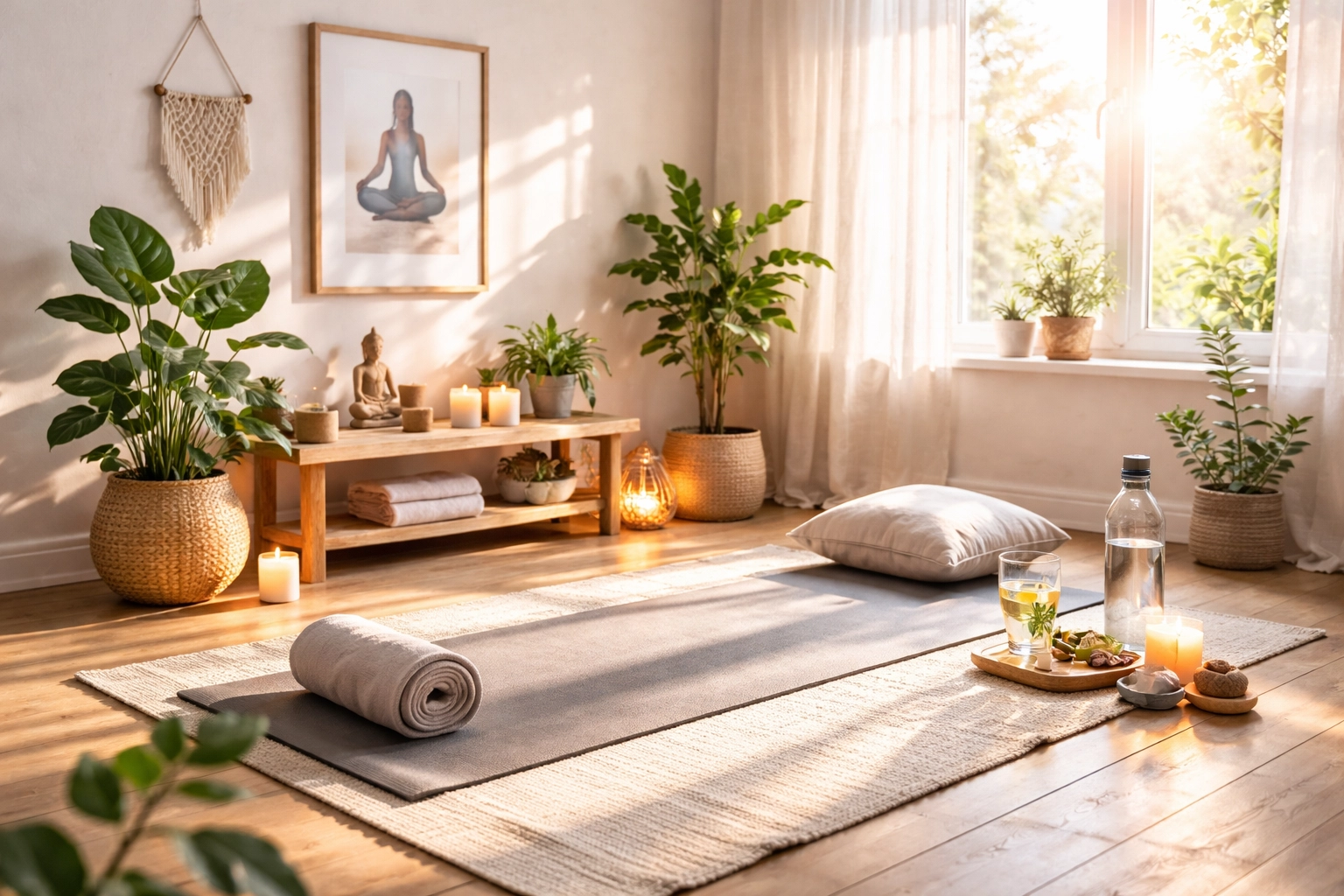
You do not need a perfect home studio. A quiet corner, a mat, and a few minutes of privacy are enough.
Practice at the same time each day
Habits become easier when they are attached to a routine. Try practicing after you wake up, after work, or before bed.
Common Mistakes to Avoid
When starting yoga for beginners, a few small mistakes can make the practice less enjoyable. Here is what to watch for.
1. Pushing too hard
Yoga should challenge you gently, but it should not feel painful. Forcing a stretch can lead to discomfort and frustration.
2. Comparing yourself to others
Your yoga practice is personal. Social media can make advanced poses look normal, but beginner yoga is about building a strong foundation.
3. Skipping the breath
Many beginners focus only on the pose and forget to breathe. Slow breathing helps the body relax and makes the whole practice more effective.
4. Practicing inconsistently
A little every day works better than waiting for the perfect moment. Keep your routine short and realistic.
5. Ignoring alignment
Try to move with awareness. For example:
- Keep knees soft when needed
- Stack joints carefully in lunges
- Avoid collapsing in the shoulders
- Keep the neck relaxed
Simple Daily Yoga Routine You Can Save
Here is a quick version of the full routine you can follow each day:
10-Minute Daily Yoga Routine
- Child’s Pose – 1 minute
- Cat-Cow Stretch – 1 minute
- Downward Dog – 1 minute
- Low Lunge – 1 minute each side
- Seated Forward Fold – 1 minute
- Supine Twist – 1 minute each side
- Resting Pose – 1 minute
This routine is ideal for:
- Morning energy
- Midday stress relief
- Evening relaxation
- Flexibility support
- Beginner-friendly wellness habits
How often should beginners do yoga?
If possible, try this daily yoga routine 5 to 7 days a week. Even 3 to 4 times a week can make a noticeable difference in flexibility, posture, and stress levels.
How long until you notice results?
Many beginners notice mental benefits like calm and clarity right away. Physical changes such as improved flexibility and reduced stiffness often become noticeable within a few weeks of regular practice.
Why This Routine Is Perfect for Busy Women
Busy schedules often leave women feeling like wellness has to wait. But health habits do not need to be extreme to be meaningful. A short yoga routine fits into real life.
This practice is especially useful because it supports several wellness goals at once:
- Movement without pressure
- Stress relief without extra planning
- Flexibility without intense workouts
- A healthier routine without losing time
That is what makes yoga such a smart choice for modern women who want to feel better physically and mentally.
Make Your Yoga Practice More Enjoyable
Tiny details can make your routine feel like a ritual instead of another task.
Try pairing your practice with:
- Soft morning light
- Calm music
- A candle or essential oil
- A glass of water or tea afterward
- A simple habit tracker
When yoga feels pleasant and easy, you are much more likely to stay consistent.
Conclusion: Start Small, Feel Better Daily
You do not need to overhaul your life to feel healthier. Sometimes the most powerful change starts with just ten quiet minutes and a few intentional stretches.
This 10-minute daily yoga routine for busy women is proof that wellness can be simple. With regular practice, you may feel more flexible, less tense, more energized, and more grounded in your day-to-day life. That is the beauty of yoga: it meets you where you are.
If you are new to yoga, start gently. Keep your expectations realistic. Let your practice grow naturally. The goal is not perfection. The goal is to feel better in your body and mind, one day at a time.
Ready to Start? Download Your Beginner Yoga Guide
Want a simple plan you can follow at home?
Download our beginner-friendly Yoga PDF guide or wellness program to get:
- Easy daily routines
- Beginner pose instructions
- Simple flexibility practice
- Stress-relief yoga flows
- A printable plan to stay consistent
Make your wellness routine feel easier, calmer, and more achievable—starting today.